Iboga vs Ibogaine: The Difference
Iboga is the plant, ibogaine one of its alkaloids. Why the distinction matters for dose, for legality, and for what people are actually taking.

Iboga is a plant, Tabernanthe iboga. Ibogaine is one alkaloid found in its root bark, the most abundant of about thirty. The distinction decides how much drug a given quantity carries, how the law treats it, and what the Bwiti tradition actually uses. It does not decide safety, because every form contains the alkaloid.
The two words are used interchangeably almost everywhere, including by people selling both. They are not interchangeable, and the difference has consequences in three directions.
The plain version
| Iboga | Ibogaine | |
|---|---|---|
| What it is | A shrub of Central Africa | A single molecule |
| Where it comes from | Grown, or taken from forest | Extracted, or made from another plant |
| What you would hold | Bark, shavings or powder | A white crystalline salt |
| Strength | Variable, rarely stated | Weighable |
| Used in Bwiti | Yes | No |
| Used in published research | Rarely | Almost always |
What iboga is covers the plant itself, and the plant section covers its botany, forms and cultivation.
Three products, not two
The reason people get caught out is that the market sells three things under two names.
Root bark. The plant material, shaved or ground. Its ibogaine content varies with the part of the root used, the age of the plant and where it grew.
Total alkaloid extract. Everything alkaloid pulled out of the bark, so ibogaine plus the others, in proportions that are never stated on the packet.
Ibogaine hydrochloride. The isolated alkaloid as a salt, and what the published research nearly always means when it says ibogaine.
An analysis of sixteen commercial products, solicited from five known vendors and submitted from nine countries, measured what was actually in them. The samples were gathered by 2013 and the results published in 2020, and the paper closes by noting the market has moved since. In material sold as root bark, ibogaine content ran from 0.6 to 11.2 per cent — close to a twentyfold spread. In material sold as ibogaine hydrochloride, it ran from 61.5 to 73.4 per cent. One sample contained no iboga alkaloids at all.
So the same weight of bark can carry nearly twenty times the drug depending on which bag it came from. Anyone reasoning from a number they read somewhere, applied to material they did not have tested, is not doing the calculation they think they are doing.
That spread is not theoretical. In a UK poisons service series, the quantities people had taken ranged from five grams to thirty-four, most of it root bark, none of it of verified alkaloid content.
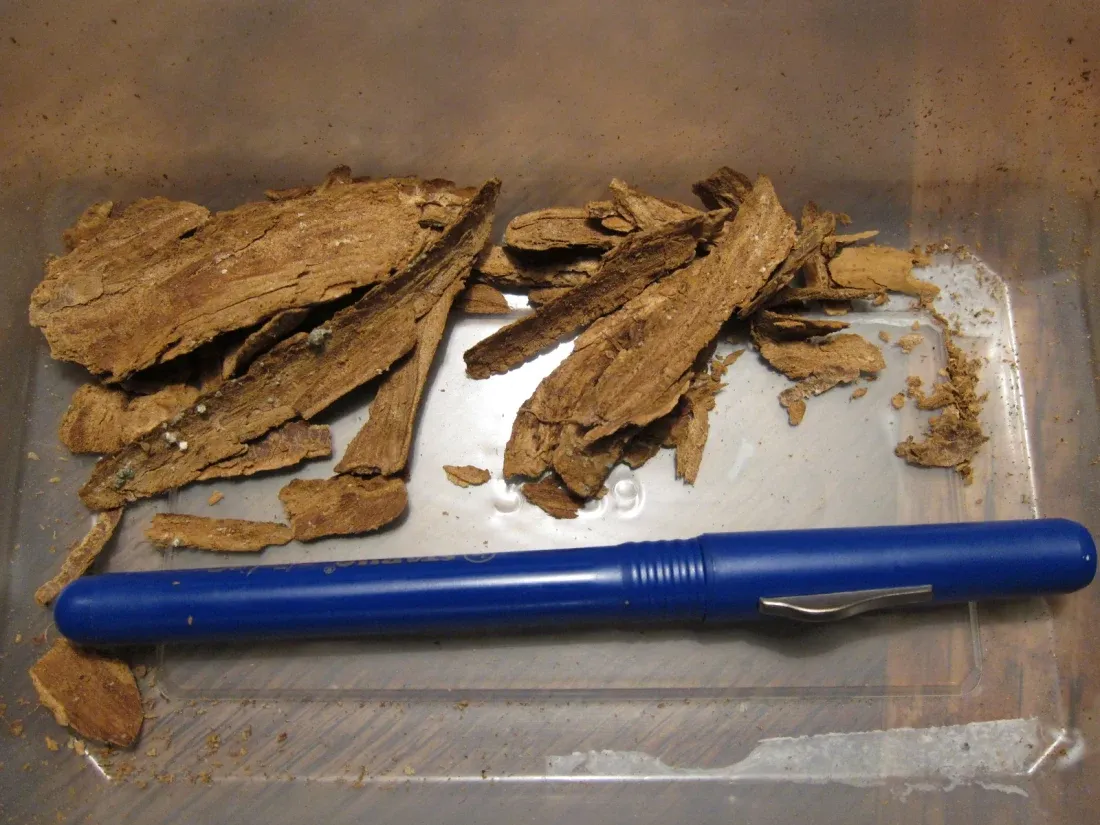

Why the law often disagrees with itself here
Drug schedules are written about chemicals, so where ibogaine is controlled the schedule usually names the molecule. But the pattern is looser than that summary suggests, and our own survey of twenty-six jurisdictions is the reason we can say so.
Several name the plant as well, and two do it in the same breath as the molecule. The American schedule lists Tabernanthe iboga as an other name for ibogaine, folding the plant into the compound rather than ignoring it. France went further in 2007 and named Tabernanthe iboga, Tabernanthe manii and ibogaïne together.
Elsewhere the pattern differs again. Colorado’s statute lists Tabernanthe, Voacanga africana and Tabernaemontana alongside the compound. Germany’s narcotics act names neither ibogaine nor iboga root bark, which is a deliberate double absence. Gabon’s own instrument concerns the plant rather than a drugs schedule at all. And three jurisdictions name no substance, catching it instead by what it does.
Nor does control of supply imply control of possession. In the United Kingdom, Germany, Canada and New South Wales, supplying ibogaine is an offence while simple possession is not. Importing is frequently a separate offence again, and that is the one that catches people.
The practical rule is that the plant and the alkaloid need checking separately, for the specific place you are in. Where ibogaine is legal covers twenty-six jurisdictions, seventeen of them with a page of their own.
The tradition uses the plant
This distinction is the one most often flattened, and it matters beyond pharmacology.
Bwiti practice uses root bark. The purified alkaloid is a twentieth-century laboratory product with no place in the ceremony, and a clinic administering ibogaine hydrochloride is not conducting a Bwiti rite whatever the room looks like. The Bwiti religion covers the practice on its own terms rather than as a precursor to a treatment.
And some ibogaine never touched an iboga plant
The last complication runs the other way. Ibogaine can be made semi-synthetically from voacangine, taken from the bark of Voacanga africana, a different and more abundant tree whose bark can be harvested without killing it. That route was patented in 1957.
What share of the world supply comes that way has never been measured. Where ibogaine actually comes from explains why the honest answer is that nobody knows, and why it matters to the conservation argument.
Nothing here says the plant is gentler than the alkaloid, and the two were tested against the same cardiac channel with near-identical results: plant-extracted ibogaine and semi-synthetic ibogaine blocked it at concentrations within assay variation of each other.
The danger belongs to the alkaloid, and every form on this page contains it. The form changes how much you are exposed to, and how well anyone can predict that. It does not change what the exposure does. Ibogaine and the heart covers that.
The short answer
If someone offers you iboga, ask which of the three they mean, and what the alkaloid content is. If they cannot say, they are selling plant material of unknown strength, and no number anyone quotes you applies to it.
Common questions
Sources
4 sources · How we source