Ibogaine vs Methadone
One has an established effect on death rates. The other has none. And a third of people on methadone already carry the change that makes ibogaine dangerous.

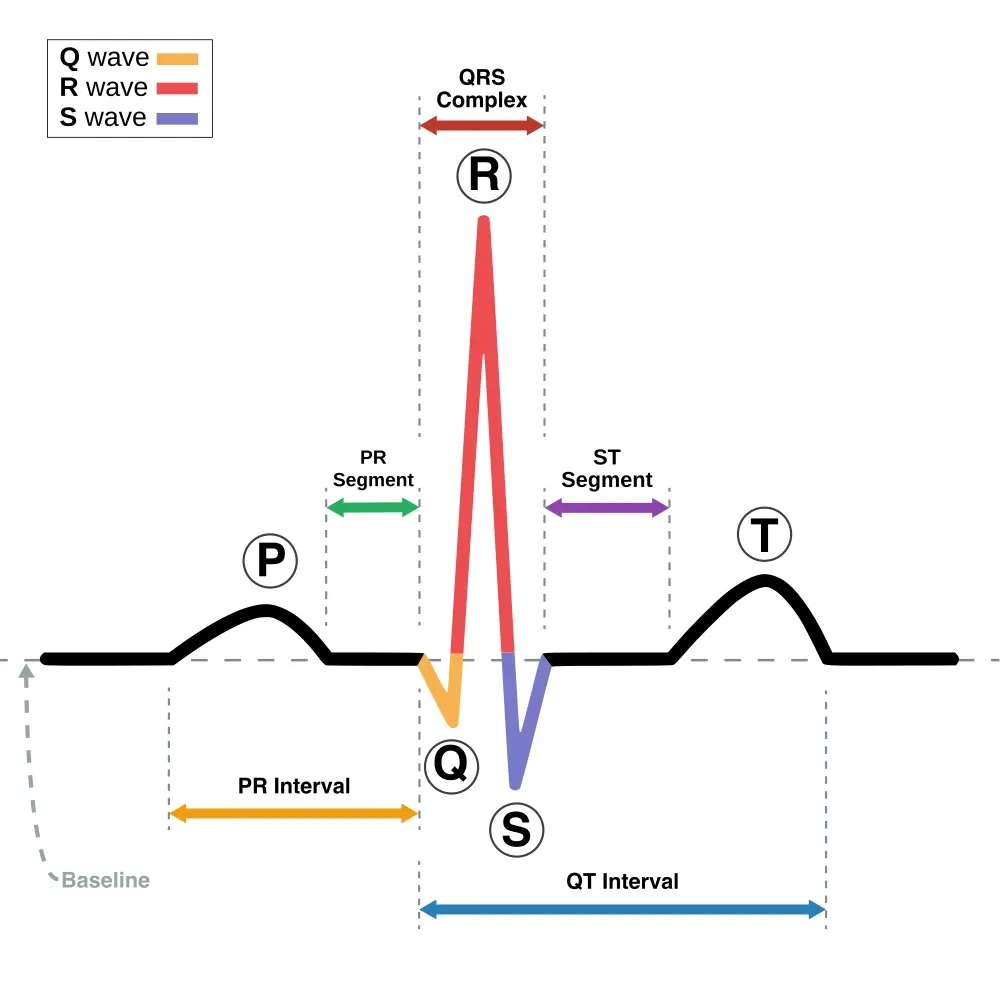
This is the most consequential comparison on the site. Methadone has an established effect on death rates in opioid dependence. Ibogaine has none, and no randomised trial has shown it treats opioid use disorder. And the one thing they share is the mechanism that makes ibogaine lethal: both prolong the QT interval, and about a third of people on methadone already have.
Most people reading this are weighing a treatment they find degrading against one that promises to end the problem in a night. Both halves of that feeling are real, and the evidence is not symmetrical.
What each has been shown to do
Methadone is an opioid agonist given daily as maintenance. Its evidence base is not about how people feel: it is about whether they die. A systematic review and meta-analysis of opioid agonist treatment and mortality found substantially lower all-cause and overdose mortality during treatment than out of it. Retention in treatment is the mechanism, which is why interruptions matter so much.
Ibogaine has no such evidence. A 2026 review of thirty years of research puts it directly: no double-blind randomised controlled trial has demonstrated that ibogaine or noribogaine can effectively treat opioid use disorder.
The only randomised, placebo-controlled trial in opioid-dependent patients tested the metabolite, found a concentration-dependent increase in the QT interval, and found only a non-significant trend toward reduced withdrawal. What the trials found sets out the full registry.
| Methadone | Ibogaine | |
|---|---|---|
| Approved for opioid use disorder | Yes, widely | Nowhere |
| Effect on mortality | Established | Not studied |
| Randomised evidence of benefit | Yes | None reporting drug-use outcomes |
| Pattern of use | Daily, ongoing | A single session |
| Prolongs the QT interval | Yes | Yes |
| Deaths documented | Yes, in overdose and in combination | Yes, cardiac |
The interaction, which is the practical point
This is what a page comparing them is actually for.
Methadone prolongs the QT interval in its own right. A meta-analysis of 22 observational studies found a pooled prevalence of QT prolongation of 34 per cent among people on methadone maintenance, and pooled torsades de pointes at 2 per cent. An earlier study of 167 methadone patients against 80 controls found a QTc of 500 milliseconds or more in 16.2 per cent against zero, with torsades in 3.6 per cent.
Ibogaine prolongs it too, and much more sharply: in a hospital study, maximum prolongation averaged 95 milliseconds and half the patients exceeded 500.
A substantial share of the people most likely to seek ibogaine treatment already have a lengthened QT interval, caused by the treatment they are trying to leave.
They are not starting from a normal baseline. They are starting closer to the edge than the general population, and the screening thresholds published protocols use would exclude some of them outright. Pre-treatment screening covers those thresholds.
Nobody has studied the combination. The published academic protocol did not risk it: patients were admitted and converted from methadone to oral morphine for eight days, in the study’s own words, in order to eliminate any QT-prolonging effects of methadone.
That conversion is itself a supervised clinical procedure. A dedicated study found that 24 of 27 patients needed higher morphine doses than the starting conversion, that withdrawal peaked within 12 to 24 hours of the switch, and that methadone’s elimination half-life averaged 59 hours.
Any provider who tells you they can treat you straight off methadone is departing from every published protocol. Ibogaine drug interactions covers the pharmacology.

Leaving methadone is its own decision
Addiction physicians have written about this pathway specifically. A 2026 commentary in the Journal of Addiction Medicine argues that detoxification from methadone or buprenorphine in favour of an as-yet unproven therapy like ibogaine could result in increased overdose risk for some people, and that the addiction medicine community should be aware of it.
The mechanism is not mysterious. Tolerance falls during abstinence, so a return to a previously routine dose can be fatal. After treatment covers that in full.
What methadone genuinely costs people
This site would be doing the same thing as the clinics if it presented methadone as unambiguously good.
It does not end dependence; it substitutes a supervised opioid for an unsupervised one. For many people it means daily attendance at a clinic, with the loss of autonomy and the stigma that carries. Coming off it is slow and difficult, and its elimination half-life is long enough that a taper takes months. And it has its own mortality risk, particularly at induction and in combination with other depressants.
Those costs are why people look for something else. They are real, and the honest comparison acknowledges them rather than pretending the choice is obvious.
What they are not is a reason to believe the alternative works. The evidence for ibogaine in opioid dependence is uncontrolled cohorts with collapsing follow-up and the largest of which found seventy per cent relapsed.
The honest summary
If the question is which is better supported, it is not close. One has an established effect on whether people die. The other has never been tested in a design capable of showing that it does anything.
If the question is whether you can move from one to the other, the answer is that nobody has studied it, every published protocol converts people off methadone first over about a week, and the two drugs push the same cardiac interval in the same direction.
And if the question is whether methadone is good enough, that is a real question with a real answer that this site cannot give you, because it depends on your life. It belongs with the person who prescribes it, before you book anything.
Common questions
Sources
5 sources · How we source
- Association of Opioid Agonist Treatment With All-Cause Mortality and Specific Causes of Death Among People With Opioid Dependence
- Ibogaine for Opioid Use Disorder: An Unrecognized Risk
- QTc prolongation and torsades de pointes (TdP) in individuals undergoing methadone maintenance treatment: A systematic review and meta-analysis
- Safety of ibogaine administration in detoxification of opioid-dependent individuals
- Thirty Years of Ibogaine Research: A Literature Review on Clinical Perspectives