Ibogaine vs Rapid Detox
A procedure promising to remove withdrawal, sold ahead of its evidence, that killed people and was abandoned. Ibogaine's precedent, not its rival.

This is not really a comparison. Rapid detox under anaesthesia made the same promise ibogaine makes, was commercialised ahead of its evidence in the same way, and has already run its arc to the end: deaths, regulator action, a trial showing no benefit, and guidelines that say it must not be offered. It is ibogaine’s precedent, not its rival.
Someone weighing ibogaine is usually weighing it against doing nothing. The more useful comparison is against the last thing that promised to remove withdrawal in a single procedure, because that story is finished and this one is not.
What it is, and the three things called by that name
Ultra-rapid detoxification administers an opioid blocker to precipitate withdrawal while the patient is under general anaesthesia, intubated and ventilated. The idea is that the worst hours pass while you are unconscious.
Two other things share the name and should not be confused with it. Rapid detoxification uses moderate sedation without airway support. And naltrexone-facilitated withdrawal management uses no sedation at all, and is the only one of the three that current American addiction guidance says can be safe and effective.
The distinction matters because clinics and coverage collapse them.
What happened at one clinic
In 2012 an outpatient clinic in New York City performed the anaesthesia-assisted procedure on 75 patients over eight months.
Two died and five more required hospitalisation. The health department’s own arithmetic gives a serious adverse event rate of 9.3 per cent, and it ordered the clinic to stop.
The two deaths are worth reading because of when they happened.
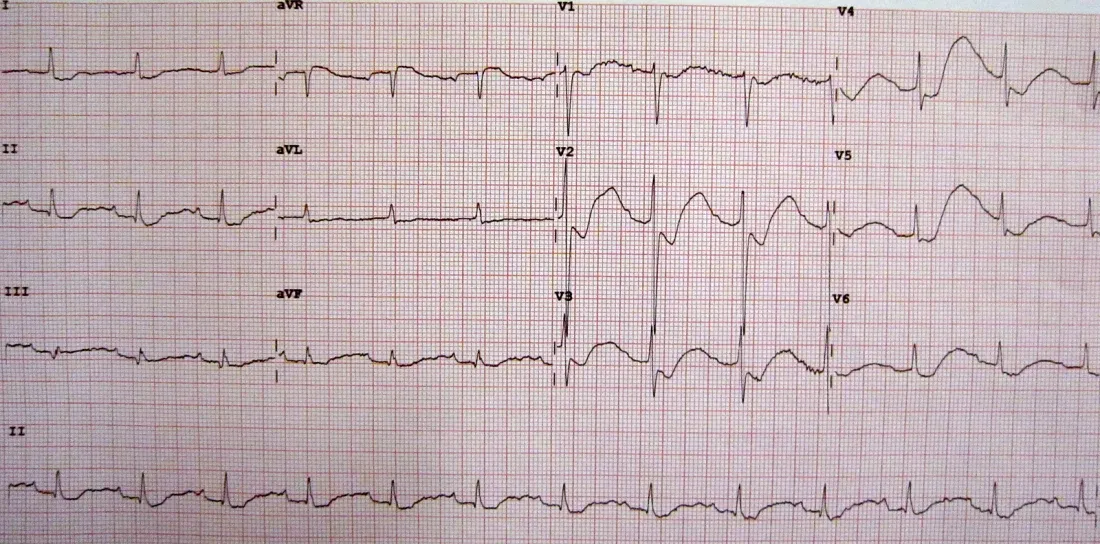
One man was discharged the day after the procedure and found dead the following day; autopsy showed pulmonary oedema and cardiomegaly. The other suffered cardiac arrest with ventricular fibrillation about ten hours after extubation, still at the clinic, with a serum potassium of 2.6. The recorded cause of death was hypokalaemia and cardiac arrhythmia following the procedure. A third patient arrested about thirty minutes after the blocker infusion began and was resuscitated.
Both deaths were after the procedure, not during it. One roughly forty hours after discharge, one ten hours after waking. A same-day discharge model does not cover that window.
And low potassium killed one of them. Vomiting and fluid loss deplete potassium, low potassium lengthens the QT interval, and a lengthened QT interval is how arrhythmias start.
Ibogaine causes vomiting in almost everyone, and in every ibogaine fatality where potassium was measured it was low. Ibogaine and the heart sets out that chain.
What the definitive trial found
A randomised trial at a university medical centre compared anaesthesia-assisted detoxification against buprenorphine-assisted and clonidine-assisted detoxification, in 106 people, each followed for twelve weeks afterwards.
| Outcome | Anaesthesia | Buprenorphine | Clonidine |
|---|---|---|---|
| Withdrawal severity | comparable | comparable | comparable |
| Naltrexone induction | 94% | 97% | 21% |
| Retention at 12 weeks | 20% | 24% | 9% |
| Opioid-positive urines | no difference | no difference | no difference |
| Potentially life-threatening events | 3 | 0 | 0 |
Anaesthesia beat clonidine. It did not beat buprenorphine on anything, and it produced three life-threatening events that the comparison arms did not: pulmonary oedema fourteen hours after extubation, a bipolar crisis with suicidal ideation five days later, and diabetic ketoacidosis two days after discharge.
The authors’ conclusion was that the data do not support the use of general anaesthesia for this purpose. And note the trial population: people healthy enough to qualify, without major psychiatric comorbidity and not dependent on other drugs. A real clinic’s patients are sicker.
Why anaesthesia does not solve the problem
The reasoning behind the procedure was that withdrawal is a subjective ordeal, so removing the subject removes the ordeal. The physiology says otherwise.
In methadone patients given a blocker under anaesthesia, adrenaline in plasma rose about thirtyfold and cardiac index rose 74 per cent. A second study found a thirtyfold adrenaline rise and a threefold noradrenaline rise, with marked cardiovascular stimulation under two different anaesthetics.
So the storm runs at full force in an unconscious, intubated person who cannot report a symptom. Cochrane’s synthesis names the consequences: the catecholamine surge plus fluid and electrolyte loss creates the potential for significant arrhythmia, and vomiting under sedation carries aspiration risk if the airway is not protected.
Its most transferable sentence is this: it may be that the rapid precipitation of withdrawal possible under anaesthesia imposes a level of physiological stress that significantly increases the risk of adverse effects, with the nature of the effect depending on the person’s physical and mental health.
That explains why a healthy trial population produced pulmonary oedema and ketoacidosis while a real clinic population produced cardiac arrest.

What the authorities concluded
The Cochrane review of nine studies and 1,109 participants found a significantly greater risk of adverse events with heavy sedation than light, relative risk 3.21, and concluded that heavy sedation confers no additional benefit while the adverse events are potentially life-threatening, so this form of treatment should not be pursued.
British guidance is the strongest formulation available in its drafting convention:
Ultra-rapid detoxification under general anaesthesia or heavy sedation must not be offered. This is because of the risk of serious adverse events, including death.
American addiction medicine recommends against it due to high risk for adverse events or death. American national prescribing guidance says it should not be used. And insurers classify it as experimental and unproven.
The arc, and why it is the point
The sequence is documentable end to end, and it should be read as a sequence.
Developed in the 1980s to reduce the discomfort of withdrawal. Commercialised ahead of the evidence — Cochrane names this explicitly, noting the controversy relates in part to commercialisation of the technique without its efficacy having been accepted as proven. Deaths and press scrutiny in the late 1990s. Regulator action, including a negotiated five-year licence suspension and a practice ban in one American state. The definitive trial in 2005. Guidelines closing the door between 2005 and 2007. Cochrane in 2010. And the practice continuing in private clinics anyway, killing two of 75 patients at one of them in 2012.
By 2017 Cochrane wrote that using opioid antagonists to induce and accelerate withdrawal is not currently an active area of research or clinical practice.
A procedure that promises to compress withdrawal into a single supervised event. Sold commercially before controlled evidence existed. Delivered in private clinics, often abroad, to people the mainstream system has failed. Producing deaths whose mechanism is cardiac and whose timing is after the procedure. Defended by practitioners who say the dangers are exaggerated in experienced hands.
Every clause of that describes both.
The difference is that one of them has finished. The trial was run, the answer was no, and the guidelines closed. Ibogaine’s two randomised trials completed in 2024 and neither has reported. What the trials found covers that.
In fairness, a dissenting position exists in print, arguing that the dangers have been exaggerated in experienced hands. It is a three-case narrative with a literature review rather than controlled evidence, carries no conflict statement in the record, and its lead author’s listed affiliation is a private treatment centre. We name it because the page should, and we attach its provenance.
The finding that outlives the procedure
One result from this literature matters regardless of what anyone does.
A follow-up study of 137 people after inpatient opiate detoxification found that five died within twelve months, three from overdose within four months, and all three were in the group that had lost tolerance. No deaths occurred among those still tolerant.
Its most uncomfortable sentence: patients who successfully completed detoxification were more likely than others to have died within a year, and no patient who failed to complete detoxification died. Its authors call urgently for replication, and we report that too.
Detoxification on its own is not a treatment for opioid use disorder. That is the position of American addiction medicine, stated in those terms, and it is the sentence that governs this page and the ibogaine pages equally. After treatment covers what follows.
Common questions
Sources
5 sources · How we source
- Deaths and Severe Adverse Events Associated with Anesthesia-Assisted Rapid Opioid Detoxification, New York City, 2012
- Opioid antagonists under heavy sedation or anaesthesia for opioid withdrawal
- Drug misuse in over 16s: opioid detoxification (CG52)
- Loss of tolerance and overdose mortality after inpatient opiate detoxification: follow up study
- Opioid antagonists with minimal sedation for opioid withdrawal