

Robert Bruce Napoleon Walker, a British merchant who reached Gabon in 1851, is connected with 141 items in the founding collection of the Pitt Rivers Museum in Oxford. His son, born in Libreville to a Mpongwe mother, wrote the first substantial Gabonese account of Gabonese plants and rites, including iboga. Both movements this site keeps describing run through one family, one generation apart.
Almost everything written about iboga in a European language was written by someone who was not from the place. That is the ordinary condition of this subject and it shapes what can be known. This page is about the exception, and about the household the exception came from.
The father
Robert Bruce Napoleon Walker lived from 1832 to 1901 and was based in Gabon from 1851, for twenty-three years, as a merchant and explorer.
He arrived twelve years after the convention that opened the estuary to French establishment, which Roi Denis and the convention of 1839 sets out in its own words.
The Pitt Rivers Museum’s own research pages set out what he sent back. Its founding collection contains 141 items, amounting to 158 objects, connected with him. Ninety of those had previously been in the collection of the Anthropological Society of London. Well over half, 83 items, are classified as weapons: bows, spears, swords, and 54 arrows on their own. There are tools, paddles, pottery, objects to do with food, and human crania. There is nothing agricultural.
The museum also records, plainly, that he had a son and a daughter by an aristocratic Mpongwe woman, and further children by other Mpongwe women, and that he married twice in England.
The son
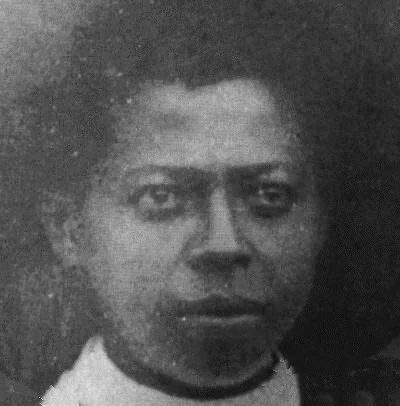

That son is identified in the biographical literature as André Raponda Walker, born in Libreville in 1871, died in 1968. He became a Catholic priest, and then something rarer.
His published work runs to dictionaries and grammars of Gabonese languages, collections of Gabonese tales, a history of the country, and two books that matter here: Les Plantes utiles du Gabon (1961) and Rites et croyances des peuples du Gabon (1962), both written with Roger Sillans.
The second is the one this site keeps meeting. Reviewing it for the journal L’Homme in 1963, Michel Izard described a work in three parts, on ritual agents and accessories, on ritual practice, and on initiation, produced with a “profonde connaissance du pays et de ses langues”.
And on the subject of this site, the review is specific. The book records that the ingestion of fragments of iboga features in a great many rites, and in Bwiti ceremonies in particular, and it treats Bwiti as a men’s society whose central purpose is to honour the ancestors.
The father’s part of this story is a collection catalogue in Oxford. The son’s part is a book about what the objects were for.
We are not drawing a moral from that. The two men did different things sixty years apart, and nothing in the record suggests the son was correcting the father. What the pairing shows is that the two directions this site keeps describing, material moving out and knowledge being written down, were not separate worlds. They ran through one house on the estuary.
What complicates it
He was a priest. He described initiatory practices while belonging to an institution that opposed them, and readers should hold that when weighing what the books emphasise and what they pass over.
He wrote in French, with a French collaborator, published in Paris, for a readership abroad. The knowledge still travelled outward. What changed is that it was compiled from inside, in the languages, by someone who had ninety years in the country rather than a season.
And his name carries the arrangement it came from. Raponda is his mother’s side. Walker is his father’s. He is the only author on this subject whose name contains both halves of the encounter.
The question we were asked, and its answer
We were asked to look into Gabonese chieftaincies and the family of King Denis Rapontchombo, the Mpongwe ruler who signed the 1839 convention with France.
We found no source connecting him to iboga, and we are not writing a page that implies one.
We did find where a persistent claim comes from. A link between Raponda Walker’s family and King Denis circulates in several places. Its traceable source is a line of dialogue in a 1995 stage play about his life, in which a family council has decided he will marry the king’s niece, quoted in a 2023 academic article analysing that play. It is theatre about a real man, and elsewhere his mother is identified as the niece of a different Mpongwe ruler entirely.
That is not a criticism of the play, which is not pretending to be an archive. It is a note about how a detail becomes a fact by being repeated.
What this page does not claim
It does not claim Raponda Walker’s account is complete or disinterested. No account is, and initiates have publicly contested outsider authority over this material, as iboga and the peoples of Gabon records.
It does not claim his father did anything unlawful. Nothing in the museum’s record suggests it, and the collection is openly catalogued.
And it does not claim the two halves cancel out. An object in Oxford and a book in Paris are both still elsewhere. What the son added was that, for once, the person writing had grown up where the writing was about.
Gabonese reliquary art in Western museums follows the objects. The Gabonese mask that sold for 4.2 million euros follows the money.
Common questions
Sources
4 sources · How we source
More in Tradition

The Babongo and Iboga
Bwiti's own account places them at its origin. The anthropology describes something more uncomfortable and more interesting than the Western telling.
Biopiracy and the Nagoya Protocol
Gabon has been bound since 2014 and has legislated at home since 2019. What the protocol obliges, and what the international register actually shows.