

Gabonese reliquary figures guarded the physical remains of ancestors. Two of them sit in American museums today, accessioned in 2002 and 2005 from the European art market. One museum’s own provenance record begins with a question mark: it does not state how or when the object left Gabon. That gap, published by the institution itself, is the most useful fact on this page.
This site spends most of its time on a molecule. This page is about wood, copper and bone, and it is here because the argument is the same one.
What these objects did
A reliquary figure is not a statue and not a god. It was mounted on a basket or bundle that held the physical remains of ancestors, and its work was to guard them.
That places these objects inside the ancestor-cult complex of which Bwiti is a part, rather than inside Bwiti itself. The distinction is worth keeping. Western sale catalogues and ceremony marketing tend to attach the word Bwiti to any Gabonese ritual object, which collapses several distinct traditions into one name that happens to be the one buyers recognise.
Where they are now, and when they got there
The dates are the part that complicates the story people expect.
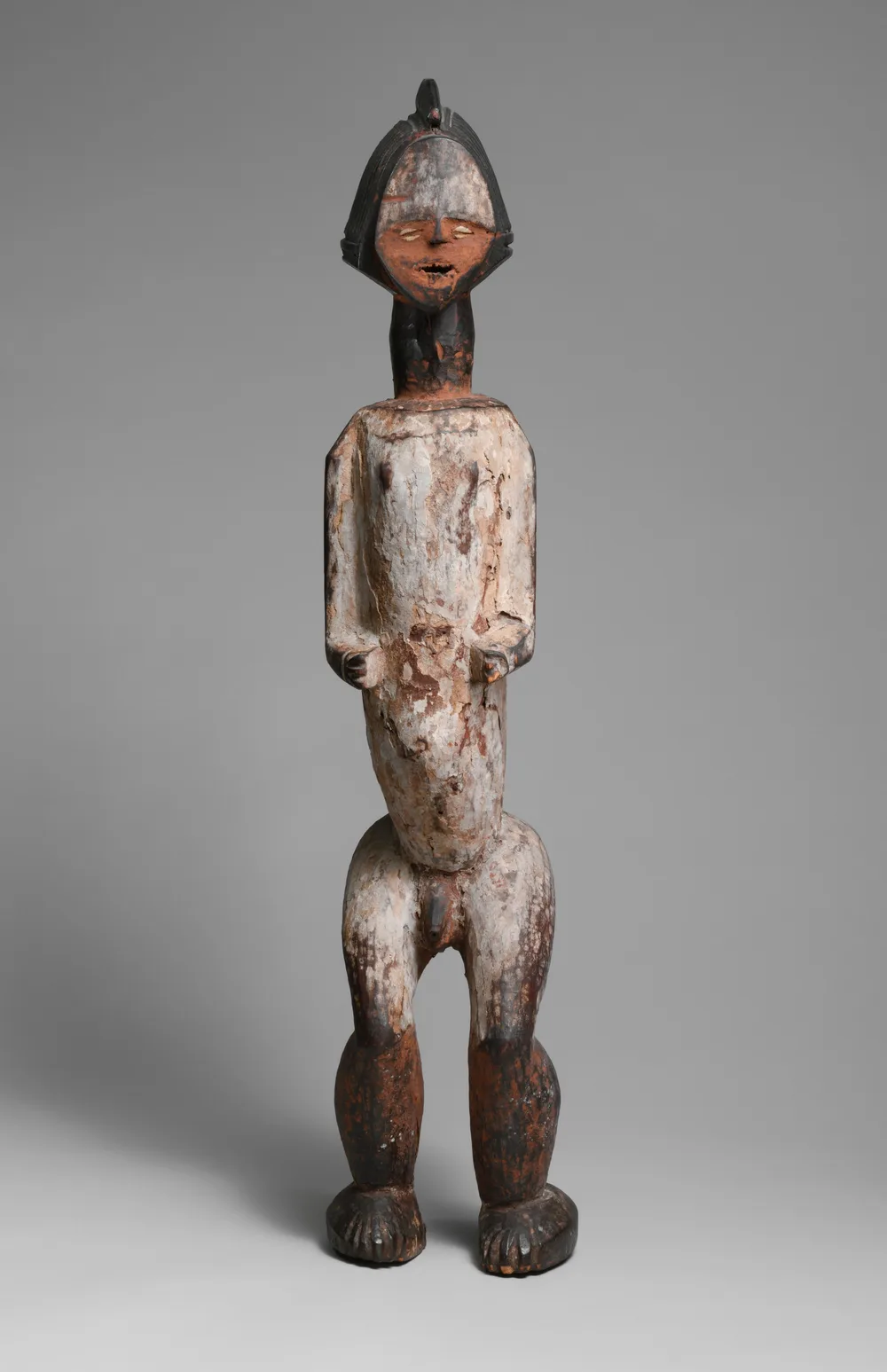
The Metropolitan Museum of Art holds a Kota reliquary figure of the Mbete group, nineteenth century, in wood, pigment, metal and cowrie shells, eighty-two centimetres tall. It came from the Pierre and Maria-Gaetana Matisse Collection and was accessioned in 2002.
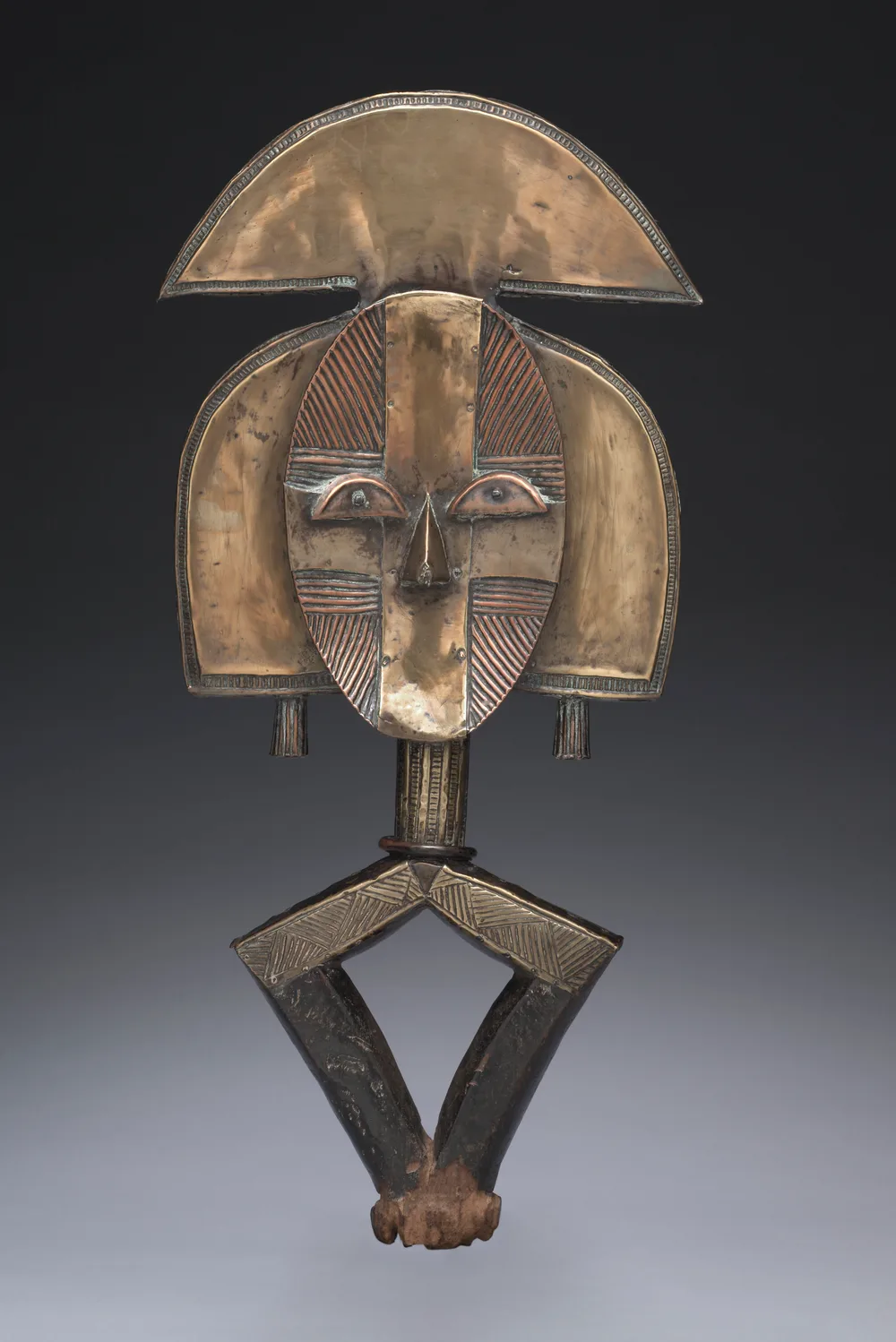
The Cleveland Museum of Art holds the mbulu ngulu above, purchased in 2005.
Neither is a colonial-era seizure. Both are recent acquisitions from the twentieth and twenty-first century art market, which is a different kind of transaction and needs a different kind of argument.
The question mark
Here is the detail that does the work, and it is the museum’s own.
Cleveland publishes a provenance chain for its mbulu ngulu. It reads: Mr. and Mrs. Willem Vranken-Hoet, Brussels, Belgium, sold to the Cleveland Museum of Art, ?–2005, then purchased by the museum, 2005 onward.
The chain starts with a Belgian couple and a question mark. Everything before Brussels is unstated. How the object left Gabon, when, from whom, and on what terms are not in the record the museum publishes.
It would be easy, and cheap, to call this looting. We do not, because we cannot show it, and because the museum has not hidden anything: it published the gap.
What the record establishes is narrower and harder to answer. An object made to guard the remains of somebody’s ancestors changed hands in Europe, entered an American museum in 2005, and the first identified party in its history is a couple in Brussels. Whoever it was taken from, or sold by, or inherited from, in Gabon does not appear at all.
An accusation invites a denial. A documented absence invites a question that nobody can currently answer.
Why this belongs on this site
Read the shape of it against the iboga patent record, and the resemblance is uncomfortable.
There, several hundred patent claims arose from a Gabonese plant, the plant was named freely in the documents, and the vocabulary that would attach an obligation to anyone appeared nowhere. Africa accounts for twenty of 1,382 filings.
Here, objects made for Gabonese ancestor cults are held, catalogued and displayed by institutions abroad, with the Gabonese end of the chain missing from the paperwork. In both cases the origin is acknowledged and the originators are not parties.
That is not a claim that museums and patent holders are doing the same thing. They are not. It is an observation that the same asymmetry keeps appearing whenever something from this tradition acquires value somewhere else, and biopiracy and the Nagoya Protocol sets out the one instrument written to address a version of it.
What this page does not claim
It does not say these acquisitions were unlawful. Nothing in the published record supports that, and both museums are transparent about what they hold.
It does not say Gabon has asked for these objects back. Restitution debates have been driven by other states with other legal histories, and Gabon’s position is not Benin’s or Nigeria’s. We have not found a Gabonese claim on either object and we do not imply one.
And it does not treat the art market as a crime scene. An object can move through entirely lawful hands for a century and still end up somewhere its makers never imagined, with nobody left to ask.
Iboga and the peoples of Gabon sets out whose traditions these are, and what the West gets wrong about Bwiti covers the habit of calling everything Gabonese by one name.
Common questions
Sources
3 sources · How we source
More in Tradition

The Babongo and Iboga
Bwiti's own account places them at its origin. The anthropology describes something more uncomfortable and more interesting than the Western telling.
Biopiracy and the Nagoya Protocol
Gabon has been bound since 2014 and has legislated at home since 2019. What the protocol obliges, and what the international register actually shows.