

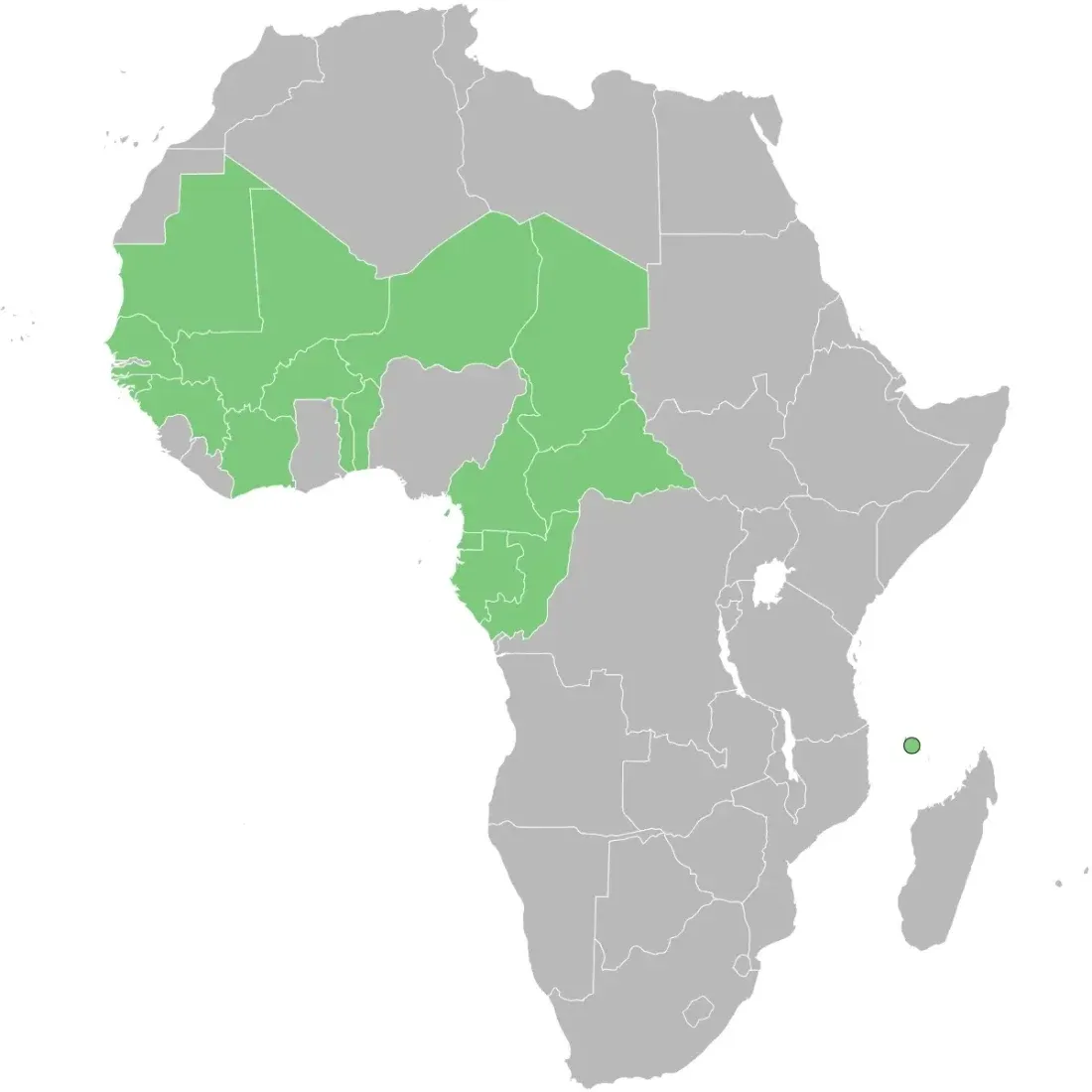
The Nagoya Protocol requires that benefits from using genetic resources, and the traditional knowledge attached to them, be shared fairly with the countries and communities they come from. Gabon has been bound by it since 12 October 2014. It binds states, not buyers, which is why an informal iboga trade escapes it.
Biopiracy is a loaded word and a precise one. It describes taking a biological resource, or the knowledge of how to use it, from the people who hold it, and deriving value from it without their agreement or a share in the return.
Iboga is a textbook case in every respect except one: there is an instrument that was written for exactly this, and it applies.
What the protocol requires
The Nagoya Protocol on Access and Benefit-sharing sits under the Convention on Biological Diversity. Three of its articles carry most of the weight here.
Article 5 requires fair and equitable sharing of the benefits arising from the use of genetic resources. Article 6 governs access to those resources, on terms set by the providing country. Article 7 extends the same logic to traditional knowledge associated with genetic resources, which is the part that reaches Bwiti rather than only the plant.
Articles 12, 16 and 17 deal with respecting customary law, with compliance, and with monitoring how resources are actually used once they leave.
Gabon’s position
Gabon is a party. It signed on 13 May 2011, accepted it on 11 November 2011, and the protocol entered into force for Gabon on 12 October 2014.
So the framework is not missing, and the usual argument that these questions await an international instrument does not apply to iboga. The instrument exists and the source country has been bound by it for over a decade.
Gabon has also legislated at home, which the debate abroad has largely missed. An arrêté of 4 February 2019 suspended iboga export “à titre conservatoire”, and décret n° 0239/PR/MJSRCAVA of 22 May 2026 now regulates access, use, exploitation, research, processing and commercialisation across the chain.
That changes the shape of the argument. The question is no longer whether the source country has rules. It is whether anyone outside observes them.
What it cannot do
The protocol binds parties, meaning states. It does not create an offence that a buyer in Amsterdam or Tijuana commits by purchasing root bark.
It works through domestic access legislation, permits and mutually agreed terms. Where material moves informally, through personal networks, unregulated export and online sale, there is no permit to check and no agreed terms to enforce. The trade that this site describes on buying iboga online is largely of that kind.
And it addresses benefit-sharing rather than conservation directly. A scheme could be fully compliant and still leave the wild population under pressure, and a plantation outside Gabon could reduce that pressure while sharing nothing.
There is a harder measure of all this than any of the marketing. The protocol works through internationally recognised certificates of compliance, published on the ABS Clearing-House. Gabon’s country page there records no such certificate and no registered access-and-benefit sharing measure. Products are nonetheless advertised abroad as the first “Nagoya-compliant” iboga, and no certificate on the clearing-house supports the phrase.
The domestic decree of May 2026 may well change that once it is notified. As things stand, the international register that exists to make compliance checkable has nothing in it for iboga.
An arrangement can satisfy an access-and-benefit-sharing requirement and still be one-sided, because the protocol sets a floor for consent and a process for agreement rather than a standard of fairness in the result.
Vendor pages routinely claim that iboga requires CITES Appendix II permits. It does not appear in any CITES Appendix, and the EU regulation that reproduces those appendices lists no Tabernanthe among the Apocynaceae. The claim appears to originate with sellers and has been repeated by search summaries. A permit invoked to reassure a buyer, for a listing that does not exist, is worth recognising for what it is.

What is actually being claimed
The protocol exists because of something, and that something is now countable.
An independent study of the patent record, published in 2026 and reading the claims of each document rather than its background, reduced 1,382 filings worldwide to 273 distinct inventions and judged 57 of them most threatening to traditional knowledge about iboga. Behind those 57 sit 256 filings.
155 of those 256 concern the treatment of addiction, withdrawal or dependence.
That is the point at which this stops being an abstract argument about genetic resources. Addiction interruption is not a modern discovery about iboga. It is the oldest and best documented use the plant has, practised long before any of the applicants existed. The majority of the most threatening claims in the world are claims over that.
The same study found that 224 of the 256 refer to indigenous knowledge, traditional medicine, or name the iboga plant in their own text. The provenance is not something a critic has to infer. The applicants wrote it themselves.
The geography is the part that bears directly on the section above. The United States accounts for 380 of the filings, international applications 187 and Europe 150.
Africa has twenty. Only two of those went through OAPI, the regional intellectual property organisation Gabon belongs to, and both were filed in the year 2000.
A country cannot assert a prior claim in a register it does not file in. Whatever the domestic decree achieves at home, the international record of who claimed what contains almost nothing from the continent the plant grows on.
The figures above are not ours, and the iboga patent record sets out whose they are, who commissioned the study, what we were able to reproduce independently, and the finding that most of these filings have already expired.
Why this matters to a reader abroad
The practical version of all this is short. A provider selling iboga, or selling a ceremony described as Bwiti, is drawing on a plant and a body of knowledge from a country that has an access framework in law.
Asking what relationship they have to that source, and what returns to it, is a reasonable question, and the answers vary. It is asked less often than the questions about safety or price, which is why it is set out here.
What the plant’s situation looks like at the source is on iboga in Gabon.
Common questions
Sources
6 sources · How we source
- The patent record on iboga medicine, a global analysis of patent claims on iboga medicine and traditional knowledge
- ABS Clearing-House, Gabon country page
- Arrêté n° 001/MFEPC/CAB-M du 04/02/2019 suspendant l'exportation de Tabernanthe iboga
- Décret n° 0239/PR/MJSRCAVA du 22/05/2026 règlementant la filière Iboga
- Nagoya Protocol on Access and Benefit-sharing, text
- Nagoya Protocol, parties and dates of entry into force
More in Tradition

The Babongo and Iboga
Bwiti's own account places them at its origin. The anthropology describes something more uncomfortable and more interesting than the Western telling.
The Bwiti Religion
A living initiatory religion in Gabon, with branches, a history and members. What the published record says, and where it stops.