

A Fang mask that an elderly French couple sold for 150 euros in September 2021 was auctioned in Montpellier six months later for 4.2 million euros. They sued. In December 2023 a court dismissed their claim as inexcusable negligence, and in the same ruling threw out a separate motion by the government of Gabon to cancel the sale and have the mask returned. Three parties wanted the outcome changed. The court said no to all of them.
We were asked to look at record prices for Punu masks at the two big houses. That is not the article this turned out to be, and the reason is worth stating before anything else.
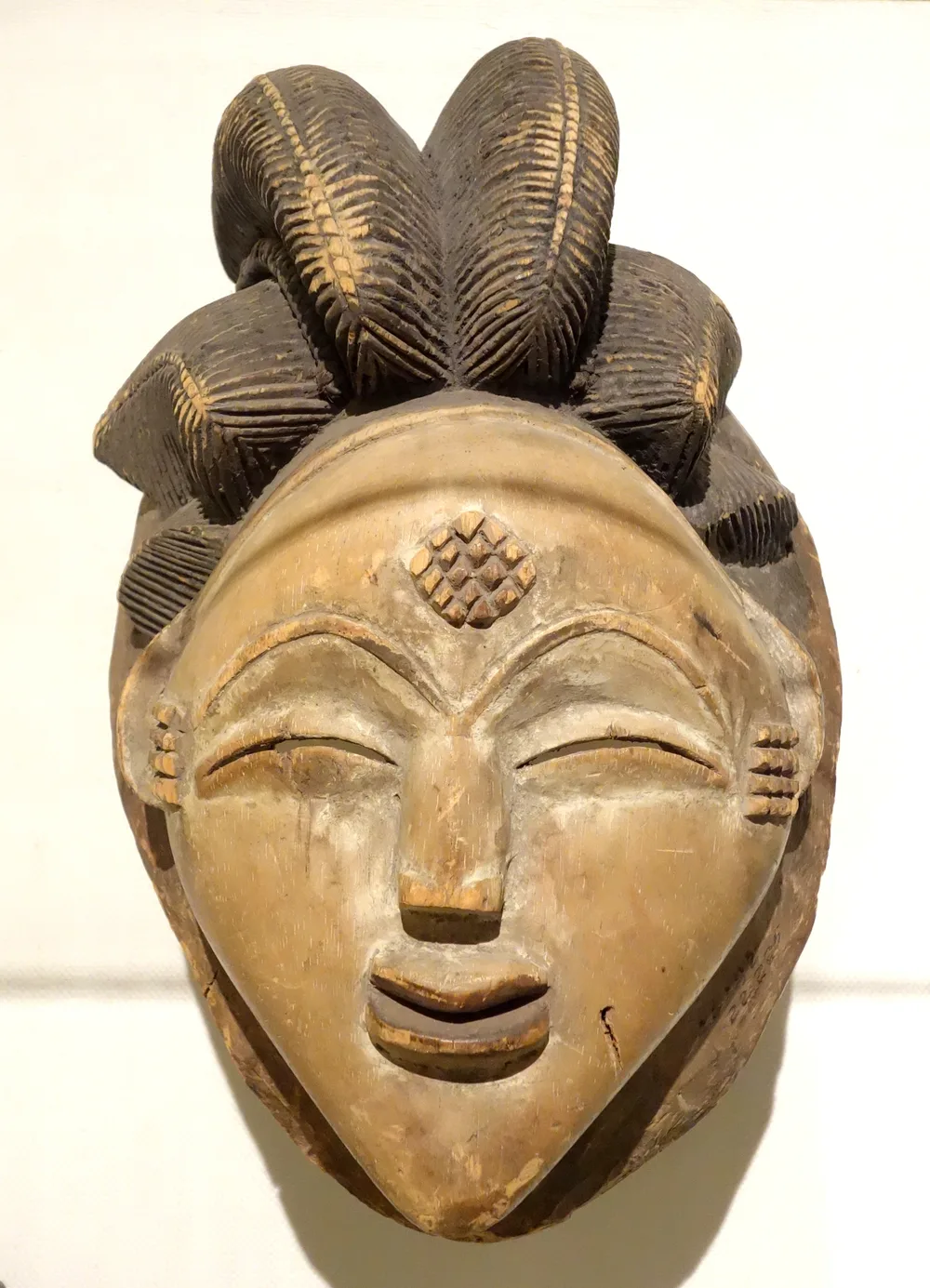
Punu okuyi masks appear regularly at both houses and their pre-sale estimates are published. What they actually sold for is not: realised prices sit behind account access.
A figure does circulate. A Punu record of £335,000 at Sotheby’s in New York is repeated on gallery pages, on auction-aggregator blogs, and now in the AI summaries that search engines print above their results, where it appears as a settled fact.
Follow it back and it thins out. The trail runs to a dealer’s own page of notable sales and to an aggregator’s blog post. Neither gives a sale date or a lot number, which are the two things that would let anybody check it.
We are not saying the figure is wrong. We are saying that a number with no date and no lot cannot be verified by a reader, and that it has now been laundered into an authoritative-looking summary anyway. So this page does not print it as a record.
What is fully documented, by a wire agency reporting a court, is a different Gabonese mask. It is a better story anyway, because a court wrote down who was entitled to the money.
_-_Punu_people,_southern_Gabon,_late_19th_century,_wood,_pigment_-_Brooklyn_Museum_-_Brooklyn,_NY_-_DSC08572.JPG)
The record for this whole category is Gabonese
Before the Montpellier sale, and before any of what follows, one fact frames the rest.
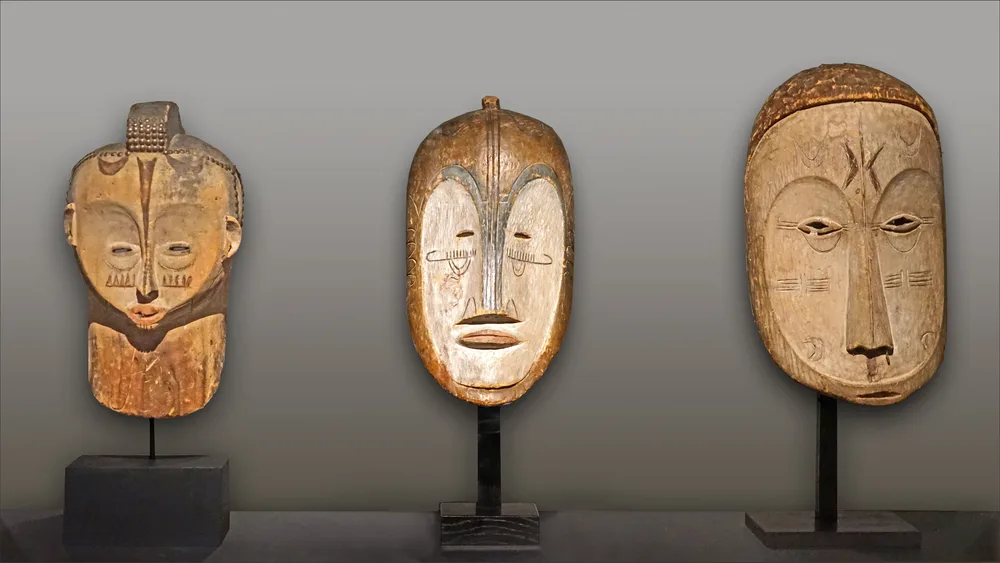
The most expensive work of African art ever sold at auction is a Fang ngil mask from Gabon. It went for 5.9 million euros at the Hôtel Drouot in Paris in June 2006, in the dispersal of the Pierre and Claude Vérité collection, and the buyer stayed anonymous.
It broke a record that had stood for sixteen years. Until that Saturday the most expensive piece was a Bangwa queen figure from Cameroon, sold at Sotheby’s in 1990 for 2.7 million euros.
Two things follow that matter for everything below. The Montpellier mask of 2022 is the same kind of object as the record holder, a Fang ngil. And the Fang head now in Chicago, whose provenance is set out later on this page, was sold in that same Vérité dispersal, lot 197.
The peak of this market, its record-breaking lot and one of its best-documented museum acquisitions all pass through one weekend in Paris in June 2006.
_(37650196626).jpg)
What happened
An elderly couple in their eighties cleared out a second home in southern France in September 2021. Among the objects were lances, a circumcision knife, a bellows, musical instruments and a wooden mask. They had belonged to an ancestor who had been a governor in Africa, and were believed to be of little value.
They let the mask go for 150 euros.
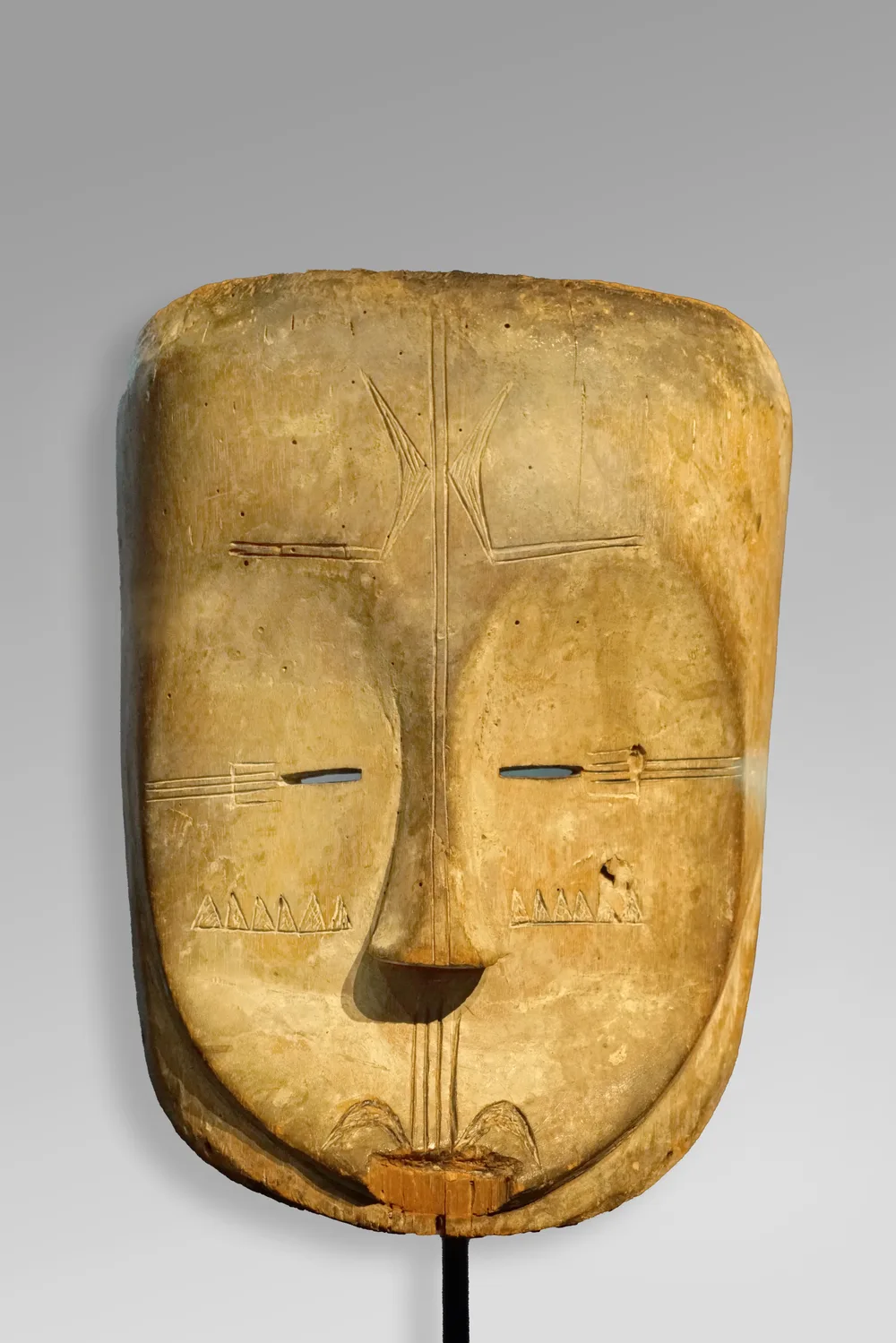
In March 2022 it was auctioned in Montpellier and sold to an unidentified buyer for 4.2 million euros. The auctioneers described it as an extremely rare nineteenth-century mask, property of a secret society of the Fang people of Gabon, and said around ten such objects are still in existence.
What the court decided
The couple sought to cancel the original sale, arguing an authentication error and saying the buyer had known the real value.
In December 2023 the court refused. They had made no attempt to have the mask valued before selling it, and their claim was characterised as “inexcusable negligence and frivolity”. They were owed nothing. The court also found that the second-hand dealer, himself no expert in African art, had not cheated them.
One detail reframes the whole dispute. Before trial the dealer offered the couple 300,000 euros, the auction’s starting price. The couple’s children refused, preferring to take the matter to court. They then received nothing.
The same ruling threw out a separate motion by the government of Gabon to have the sale cancelled and the mask returned.
The wire report gives no reasons for that part, and we do not invent any. What the record shows is the structure: a French court, deciding a French commercial dispute between a French couple, a French dealer and an anonymous buyer, in which the state whose people made the object was one more rejected motion.
Everything that made the mask worth 4.2 million euros came from Gabon. Nothing that the court awarded went there.
The chain is always the same shape
This is where the auction world stops being a separate subject.
Look at how the mask arrived on the market: a colonial-era governor, an inheritance, a house clearance, a dealer, a saleroom. Now look at a Punu okuyi mask offered at Sotheby’s, whose catalogue entry states its provenance plainly: collected in situ by a colonial administrator between 1913 and 1934 in the Haut-Ogooué, then transmitted by descent, then a private collection.
Two objects, two traditions, one chain. Colonial acquisition, European descent, market. In neither does anyone from Gabon appear as a party after the first step, and in the Punu entry the first step is described in three words that do all the work: collected in situ.
_(55225751943).png)
A third chain is written out in full, and it is worth reading as printed. The Art Institute of Chicago holds a Fang head in wood and copper, mid to late nineteenth century. Its published provenance runs: Pierre Vérité, Vérité Gallery, Paris, from 1948; by descent to Claude Vérité, Paris, 1993; sold, Hôtel Drouot, Paris, 17 June 2006, Arts Primitifs: Collection Vérité, lot 197, to the Art Institute.
Named dealer, named heir, named saleroom, named date, numbered lot. Every party after 1948 is identified. What is not recorded is anything before 1948, and nobody in Gabon appears anywhere in the line.
A third question mark
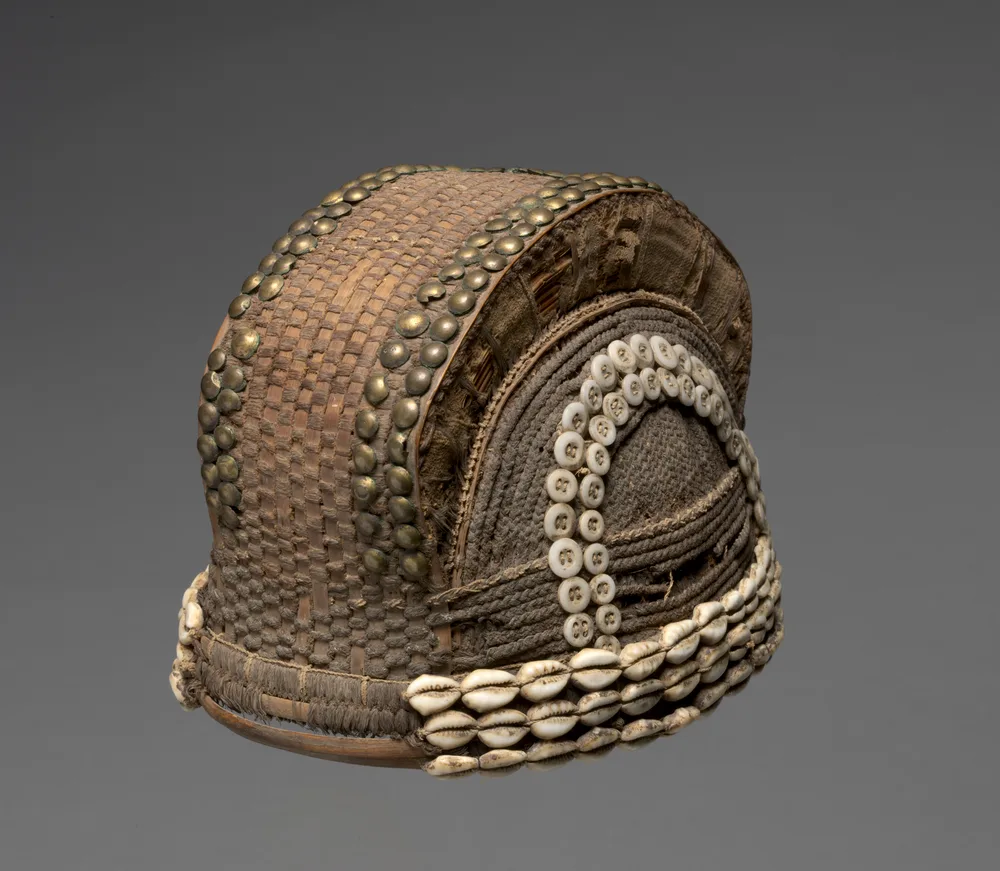
Four Gabonese objects, in four collections. Two publish a provenance that begins with a question mark. One begins with a Paris dealer in 1948. The fourth, in Paris, begins with the dealer who made the market in the first place.
The museums are not concealing anything. They print the gap, which is more than the saleroom does. But the gap is always in the same place: the moment the object left the people who made it.
Compare the Kota reliquary figures now in American museums, where the published provenance for one of them opens with a question mark before a couple in Brussels. Same shape again.
What this is not
It is not a Bwiti story, and the distinction matters here more than usual.
Ngil was a Fang institution and okuyi is a Punu masquerade. Neither is Bwiti, and neither is an iboga object. Sale catalogues and ceremony marketing both tend to attach the word Bwiti to anything Gabonese, because it is the word buyers recognise. This site keeps them apart. Iboga and the peoples of Gabon sets out which traditions belong to whom.
It is also not a claim that the buyers or the court behaved unlawfully. The dealer was found not to have cheated anyone. The couple lost through their own negligence, and had been offered 300,000 euros they refused. On the published facts, everybody in France acted within the law.
That is exactly what makes it useful. The outcome did not require anyone to misbehave. A chain of entirely lawful transactions moved 4.2 million euros between French parties, over an object made by Fang hands for Fang purposes, and the only participant asking for the object itself rather than the money was dismissed in a single sentence.
The iboga patent record shows the identical asymmetry in a register made of paper instead of wood.
Common questions
Sources
6 sources · How we source
- Controversial African mask sale cleared by French court
- Masque, Punu, Gabon, lot 94, Arts d'Afrique et d'Océanie
- Art : prix record pour un masque Fang
- Head, Fang, Gabon, mid-late 19th century, provenance Collection Vérité, Hôtel Drouot, 17 June 2006, lot 197
- Headpiece (nlo-o-ngo), Gabon, Fang style, early 1900s
- Sculptural Element from a Reliquary Ensemble (mbulu ngulu)
More in Tradition

The Babongo and Iboga
Bwiti's own account places them at its origin. The anthropology describes something more uncomfortable and more interesting than the Western telling.
Biopiracy and the Nagoya Protocol
Gabon has been bound since 2014 and has legislated at home since 2019. What the protocol obliges, and what the international register actually shows.