Ibogaine Analogues: What Exists, and What Reached People
Three analogue families, none ever given to a human. And a recurring pattern where the spinout puts a different molecule into trials.

Three analogue families beyond 18-MC have real research programmes, and not one has ever been given to a human being. The only iboga analogue that reached people is 18-MC, whose programme was suspended in 2022 without an efficacy result. And in two separate cases the company that licensed an analogue put a different molecule into trials instead.
The analogue argument is genuinely good: if the cardiac liability can be engineered away while the useful effect survives, that solves the whole problem. This page is about how far anyone has got.
The three families
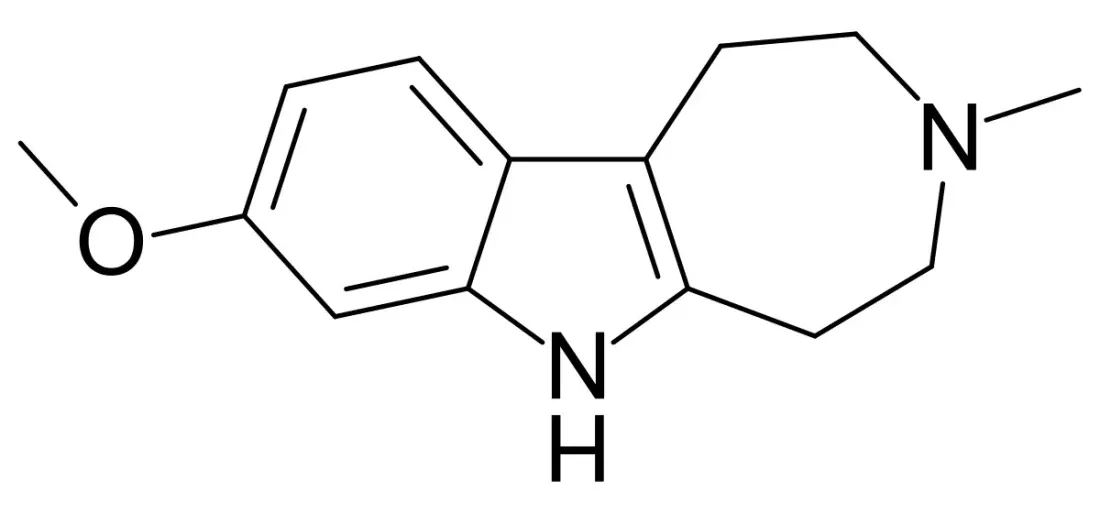
Tabernanthalog, described in a 2021 Nature paper as a non-hallucinogenic psychedelic analogue that reduced alcohol- and heroin-seeking in rodents. Patented by a university, with the paper disclosing that its senior author is president and chief scientific officer of the company that licensed the technology.
Oxa-iboga, described in 2024. Its central claim is precise and directly relevant: these compounds lack the proarrhythmic adverse effects of ibogaine and noribogaine in primary human cardiomyocytes while disrupting opioid use in animal models. Its disclosure records that two authors co-founded the company that licensed the assets from the university.
Coronaridine congeners, a broader academic family including ibogaminalog and ibogainalog, studied mainly for sedative, anxiolytic, antidepressant, anticonvulsant and antinociceptive effects. Mouse and rat throughout.
| Family | Best evidence | Human trials |
|---|---|---|
| 18-MC | Phase 1, 108 people | Programme suspended 2022, no results posted |
| Tabernanthalog | Rodent, plus cell work | None, ever |
| Oxa-iboga | Rodent, human heart cells | None, ever |
| Coronaridine congeners | Rodent | None, ever |
We searched the trial registry for each by name. Tabernanthalog returns zero. Oxa-iboga returns zero. The congeners return zero.

The pattern worth noticing
This one repeats, and it is the most useful thing on the page.
An academic laboratory produces an iboga analogue and publishes it. The university patents it. A company founded by the senior author licenses it. And then the company puts a different molecule into human trials.
For tabernanthalog, the company’s actual clinical candidate is a substituted indole with no azepine ring, which came from a separate screening programme and sits in a different patent family whose text does not mention tabernanthalog at all.
For oxa-iboga, the company has two registered trials and neither is an oxa-iboga compound.
It does not mean the analogues are bad, and it does not mean anyone acted improperly. Choosing the most developable candidate is ordinary drug development, and licensing an academic asset is how the system is designed to work.
What it means is narrower and worth holding: the iboga analogue programmes that generate the headlines are not the programmes going into people. When you read that a company is developing a safer ibogaine, check which molecule is actually in the trial.
The independent literature is quieter than the headlines
One finding deserves more attention than it gets, because it comes from a group with no declared commercial interest.
Across roughly eight papers, an independent laboratory comparing compounds within the iboga series repeatedly finds tabernanthalog is not the best one in its own series. In one memory task it showed less efficacy than a congener, and another congener rather than tabernanthalog improved recall at twenty-four hours.
The same group reports that tabernanthalog inhibits certain nicotinic receptors with higher potency than the other targets tested, which matters because the nicotinic route is one of the main proposed mechanisms for the anti-addictive effect.
And a 2025 paper found tabernanthalog does not produce an immediate glutamate burst or the gene-expression response previously assumed necessary for the plasticity effect, which unsettles the mechanism story rather than confirming it.
None of that is fatal. All of it suggests the field is earlier and less settled than the 2021 headline implied.
What the analogue that did reach people showed
18-MC is the exception and its arc is instructive. On the cardiac question the laboratory evidence is strong: it blocks the relevant channel more than fourteen times less potently than ibogaine, while binding it with comparable affinity. Our page on 18-MC sets that out.
It went into a phase 1 study of 108 people, completed December 2021, which has never posted results. In 2022 its owner stated that further clinical development would depend on finding outside capital, and the programme was suspended. Since 2023 the company has not mentioned it, or ibogaine, in an annual report.
And it did not reproduce ibogaine’s effect on the growth factor most often invoked to explain lasting change, where the metabolite noribogaine did. Who is developing ibogaine covers what happened commercially.
The warning from inside the field
A 2026 review from an academic medical centre puts the caution better than we could. It argues that the field, particularly within policy-driven research initiatives, must resist oversimplified narratives that frame derivatives as uniformly superior or interchangeable, and that greater conceptual clarity and mechanistic humility are essential.
That is worth reading against the way analogues are usually invoked: as proof that a safe version is coming.
What the analogue programme actually tells you
Not that a safer ibogaine exists. Nobody has taken one.
What it tells you is what the people who know this pharmacology best decided to do. They looked at ibogaine, concluded the cardiac risk was the thing to engineer away, and spent decades trying. That is a considered judgement about where the danger lies, made by the field itself.
It agrees with what the fatality record shows. And it is the strongest argument on this site that the risk is real, made by people who were trying to build something rather than to warn anyone.
Common questions
Sources
4 sources · How we source
- A non-hallucinogenic psychedelic analogue with therapeutic potential
- Oxa-Iboga alkaloids lack cardiac risk and disrupt opioid use in animal models
- Toward a nuanced framework for the medical development of ibogaine and its analogues and derivatives
- 18-MC for treatment of substance use disorders (AU2020357951B2)