

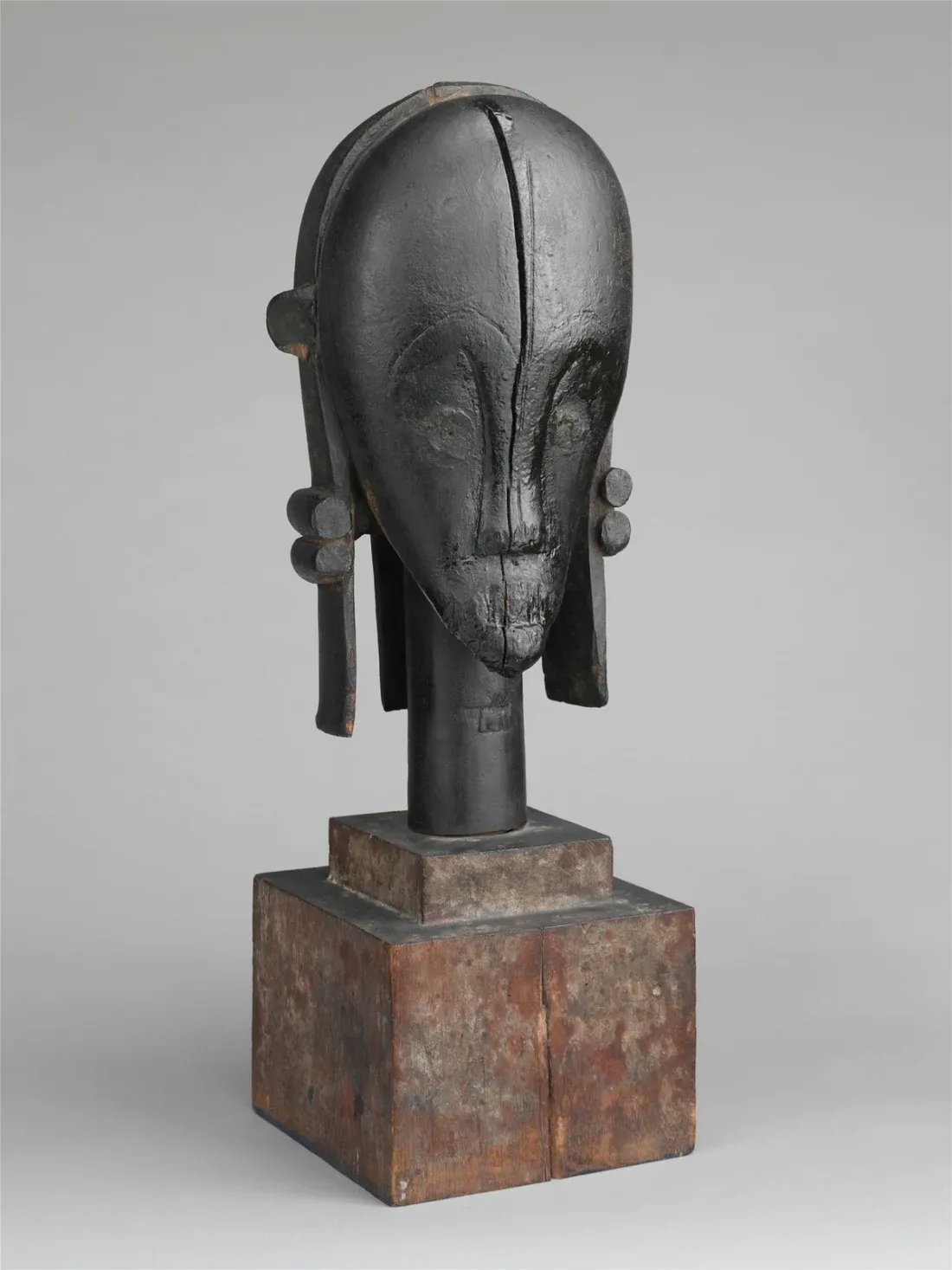
The best-known form of Bwiti is Fang, and it is also the youngest. Anthropological work dates its emergence to around 1910, through adaptation of a southern Gabonese rite, probably during interethnic mixing in colonial forestry worksites. Nearly all English-language writing describes this form and calls it Bwiti.
The Fang are the largest people in Gabon and the subject of the one major English monograph on Bwiti. That combination has shaped almost everything written in English about iboga, including the parts that are wrong.
A twentieth-century adaptation
Fang Bwiti was born around 1910, through the Fang adaptation of an initiatory rite from southern Gabonese populations, probably during interethnic mixing in forestry worksites.
That setting is worth sitting with. The best-known form of Bwiti took shape in a colonial labour camp, where people from different regions were brought together to cut timber.
Contemporary scholarly reception of the 1982 ethnography places the emergence in the late nineteenth century at the earliest, records colonial repression in the 1920s and 1930s, and a reorientation after independence.
A living religion with a documented history, in other words. What it is not is ancient and unchanged, which is the claim almost every Western account makes. What the West gets wrong about Bwiti collects the rest.
Both words are borrowings
The standard ethnography states it directly: eboga or eboka is the Fang name for the plant, and both the species name and the Fang name are taken from the Myene term iboga, of the coastal Galwa and Mpongwe cluster.
And Bwiti is Tsogo, from the southern mountains. The Fang name for their own ancestral cult is a cognate but different word.
So the practice arrived from the south and the plant name from the coast, and the people who became most associated with both borrowed each from somewhere else. The Mitsogo and iboga covers the source of the practice.
The 1901 chemistry note that coined the word ibogaine gives the Fang form as Aboua. The 1982 ethnography gives it as eboga or eboka.
Both are attested in their own material and we are not going to quietly pick one. A colonial-era chemist’s ear and a fieldworking anthropologist’s transcription are not the same instrument. Iboga names covers the etymology.
Not all Fang, and not one practice
This corrects the assumption the monograph’s existence creates.
An ethnographer who worked among Fang communities between 2004 and 2008 states it plainly: Bwiti is not practised by all Fang, there is no homogeneity in the practice, and diverse communities of initiates make up the religious landscape.
Her own fieldwork was with one named community in the Minvoul district in the north. One community, one district, and she says so.
There is also no unified Bwiti church in Gabon, and researchers describe a multitude of influences and chapels. A single description of Fang Bwiti is a description of one chapel.
The 1982 monograph, and what it is
The foundational English source is an ethnography of Fang Bwiti published in 1982, built on more than two decades of work, running to some eight hundred pages. Contemporary reviewers treated it as the sum of its author’s previous work and the first comprehensive treatment of the subject.
It is also, specifically, a Fang monograph. It is not about the Mitsogo Bwete, the Misoko branch, the Punu, the Nkomi or the Babongo.
That is not a criticism of the book. It is the reason an English reader encounters Fang practice described thoroughly and reasonably concludes that is Bwiti, when the material that would complicate that impression is in French.
The harp that was forgotten
One documented finding belongs here more than anywhere.
Historical sources from the German colonial period, including recordings, photographs and descriptions, show harps in the Fang region bearing a sculpture representing a man. The polychrome female sculpture familiar today, and presented in Western accounts as the ancient Fang sacred form, belongs to the syncretic Bwiti cult.
Deeper still: although the Fang no longer remember it, a harp of slightly different morphology existed in their culture long before the instrument was reintroduced through the borrowing of Bwiti.
An older Fang instrument, forgotten, and a newer one presented as timeless. It is the same shape as the dating of the practice itself.
The Fang ritual vocabulary
Two names appear in the literature and are worth having.
Bieri is the proper name for the Fang ancestral cult, cognate with Bwiti but distinct from it. Ngozo is named as the main Fang ritual in the ethnomusicological work.
Beyond that we are not going to describe the ritual. The ethnographers closest to this material withhold, deliberately, and one of them has written about initiatory secrecy as a system organising relations rather than as a container of facts. Bwiti initiation explains why.
What this page is for
If you have read that Bwiti is an ancient unbroken Fang tradition, every element of that sentence is contradicted by the scholarship: the dating, the ethnic attribution, the assumption of uniformity, and the implication that the Fang originated it.
None of which makes Fang Bwiti less real, and none of it is a criticism of the people who practise it. Religions are borrowed, adapted and dated. It is only Western writing that needs them to be timeless.
Common questions
Sources
4 sources · How we source
More in Tradition

The Babongo and Iboga
Bwiti's own account places them at its origin. The anthropology describes something more uncomfortable and more interesting than the Western telling.
Biopiracy and the Nagoya Protocol
Gabon has been bound since 2014 and has legislated at home since 2019. What the protocol obliges, and what the international register actually shows.