The Powder Labelled Iboga That Contained No Iboga
A woman died after taking a powder bought online as Iboga du Gabon. Analysis found no ibogaine at all, and alkaloids of an entirely different plant.

A thirty-year-old woman bought a powder online, labelled Iboga du Gabon. She was dependent on heroin. She was found dead. When toxicologists analysed the powder they found no ibogaine in it at all, and instead the alkaloids of Rauvolfia, a different plant. Every precaution she might have taken about how much to use would have been a precaution about the wrong species.
Most of this site’s safety writing is about a substance that is genuinely dangerous. This page is about the one failure that no amount of care about that substance can reach.
What the label said
The powder was bought over the internet and sold as iboga from Gabon. The label named a plant and named a country, which is more provenance than most of this market offers.
Both halves were wrong.
What was actually in it
A Rennes forensic toxicology team analysed the powder and the post-mortem samples. Their 2016 paper states the finding directly: the analysis revealed the absence of ibogaine, and the presence of ajmaline, yohimbine and reserpine, alkaloids found in Rauvolfia species.
They then developed a method to quantify those three compounds in her body.
| Alkaloid | Blood | Bile |
|---|---|---|
| Ajmaline | 109.1 ng/mL | 1528.2 ng/mL |
| Yohimbine | 98.2 ng/mL | 914.2 ng/mL |
| Reserpine | 30.8 ng/mL | 561.2 ng/mL |
Systematic toxicological analysis also found oxazepam at a therapeutic concentration, and cannabinoids.
Death was attributed to the ingestion of a substantial quantity of crushed Rauvolfia root in association with concomitant drug withdrawal.
The point of this page is not that she took something useless instead of something powerful.
Reserpine and ajmaline are pharmacologically serious compounds in their own right, both with histories as cardiovascular medicines. Yohimbine is a third active alkaloid again. A person preparing for the known risks of ibogaine, and watching for them, would have been watching for the wrong thing entirely.
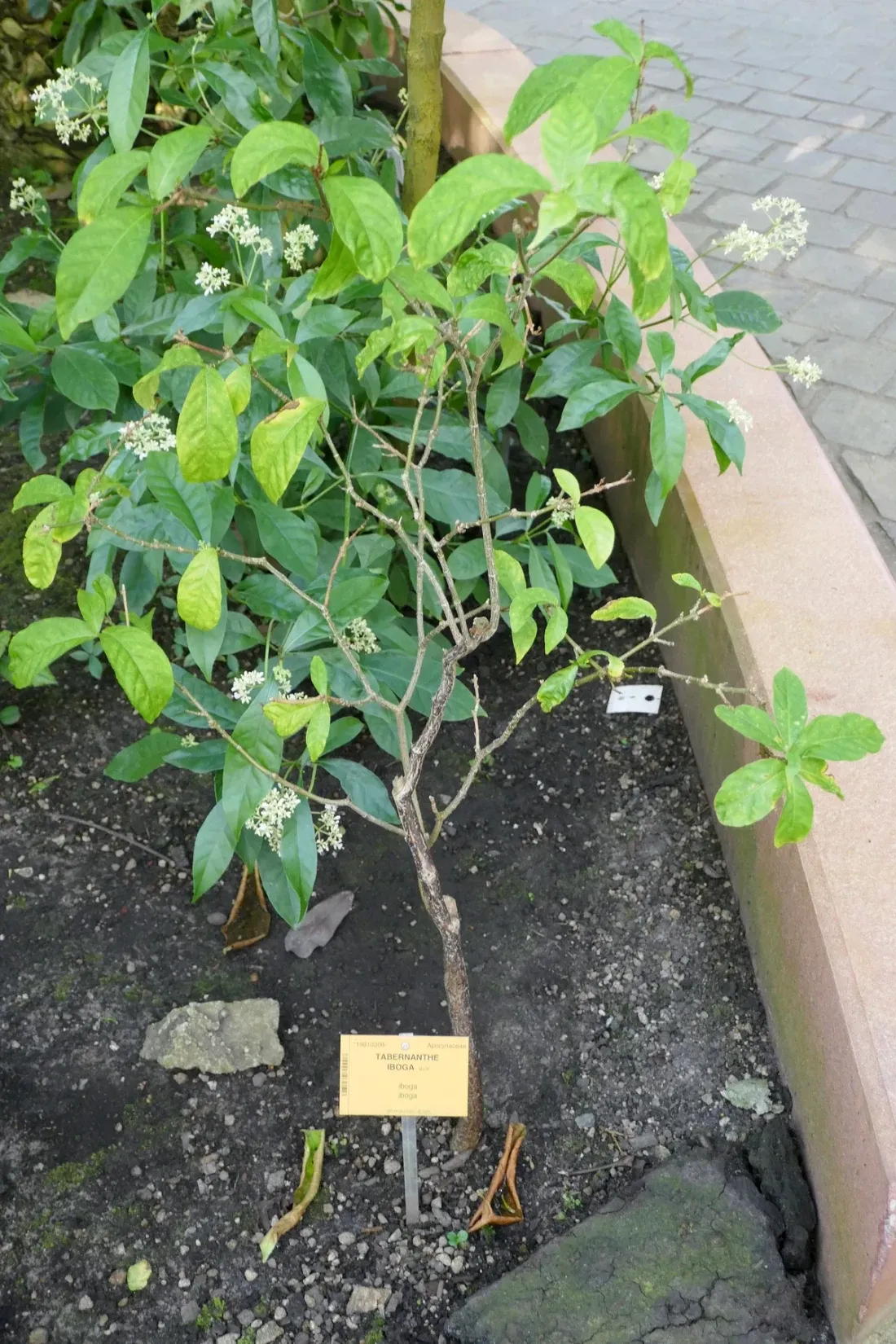
.jpg)
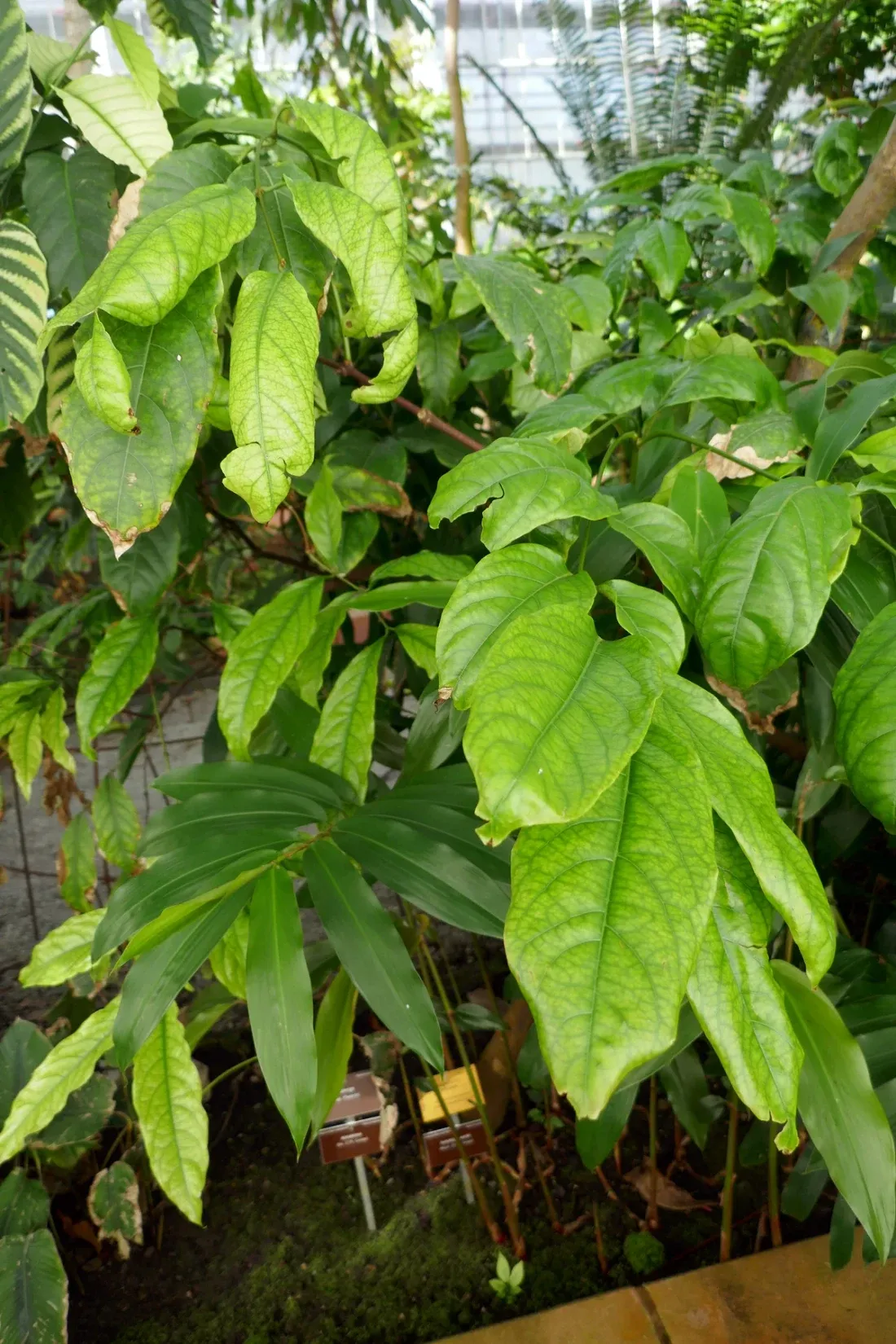
.jpg)
Why the substitution was not obvious
Rauvolfia and Tabernanthe iboga belong to the same plant family, the Apocynaceae, and both produce indole alkaloids. Ground into a powder, the resemblance is not superficial: it is chemical.
That is why establishing what she had actually taken was a research problem rather than a lookup. A follow-up study in 2020 returned to the same case using molecular networking, a technique for graphically comparing complex mass-spectrometry data, precisely because the substance was missing from the usual databases that toxicologists search.
The investigators compared four things side by side: the suspect powder, an authentic Tabernanthe iboga root powder, and her blood and bile. The comparison produced a cluster of indole alkaloids characteristic of the family, and it took that comparison to tell one member of it from another.
If it took a research group with high-resolution mass spectrometry and a reference sample to identify the plant, a buyer holding the bag had no chance at all.
What this changes and what it does not
It does not establish a prevalence. This is one documented case. Nobody has published how often material sold as iboga is not iboga, and this page does not guess.
It does change the shape of the risk. Every other safety page on this site concerns what ibogaine does to a person: the cardiac risk, the interactions, the contraindications. All of that assumes the material is what it says it is.
The known variability is already severe. Published analysis of provider-supplied products found ibogaine content in root bark ranging across roughly twentyfold, and material sold as the purified hydrochloride running between 61.5 and 73.4 per cent. Forms of iboga sets that out. But those are all failures of strength. This is a failure of identity, and it sits outside the entire system of precautions people build.
And it says something about provenance claims. The label named Gabon. The country of origin is the single most commonly invoked mark of authenticity in this market, and here it was printed on a powder that contained none of the plant it claimed. A geographic claim on a packet is marketing text. Buying iboga online covers the rest of what that market does not tell you.
The part that is hardest to write
She was in withdrawal. The forensic conclusion names that as a contributing factor alongside the Rauvolfia.
People reach for iboga at exactly the moment they are least able to absorb a setback, and least equipped to evaluate a seller. That is not a character failing. It is the situation the market is built around, and it is why the absence of any way to verify what is in the packet matters more here than it would almost anywhere else.
Common questions
Sources
3 sources · How we source
- Death related to consumption of Rauvolfia sp. powder mislabeled as Tabernanthe iboga
- Comparative molecular networking analysis of a Rauwolfia plant powder and biological matrices in a fatal ingestion case
- Mise au point du dosage d'ajmaline, de yohimbine et de réserpine par CL-HR-SM, application à un cas d'intoxication mortelle