The GRATK Treaty and Why It Cannot Reach the Iboga Patents
Adopted in 2024 to make patent applicants disclose origin. It is not in force, not retroactive, cannot invalidate a patent, and Gabon has not signed it.

In May 2024 the world’s patent states adopted a treaty requiring applicants to say where their genetic resources came from and whose traditional knowledge they used. It is the instrument written for exactly the gap this site measured in the iboga patent record. It is also not in force, not retroactive, and unable to invalidate a patent for non-disclosure. Gabon has not signed it.
This site counted the iboga patent record and found a precise asymmetry. Of the 148 documents carrying ibogaine on the front page, 79 name Tabernanthe iboga in their text and 75 mention Africa. The number containing the phrase “traditional knowledge” is zero, and so is the number containing “traditional medicine” or “traditional use”.
Applicants say where the molecule came from. What no applicant writes is the term that would attach an obligation to having said it.
The obvious next question is whether anything is being done about that. Something is. This page is about how much less it does than its billing suggests.
What the treaty requires
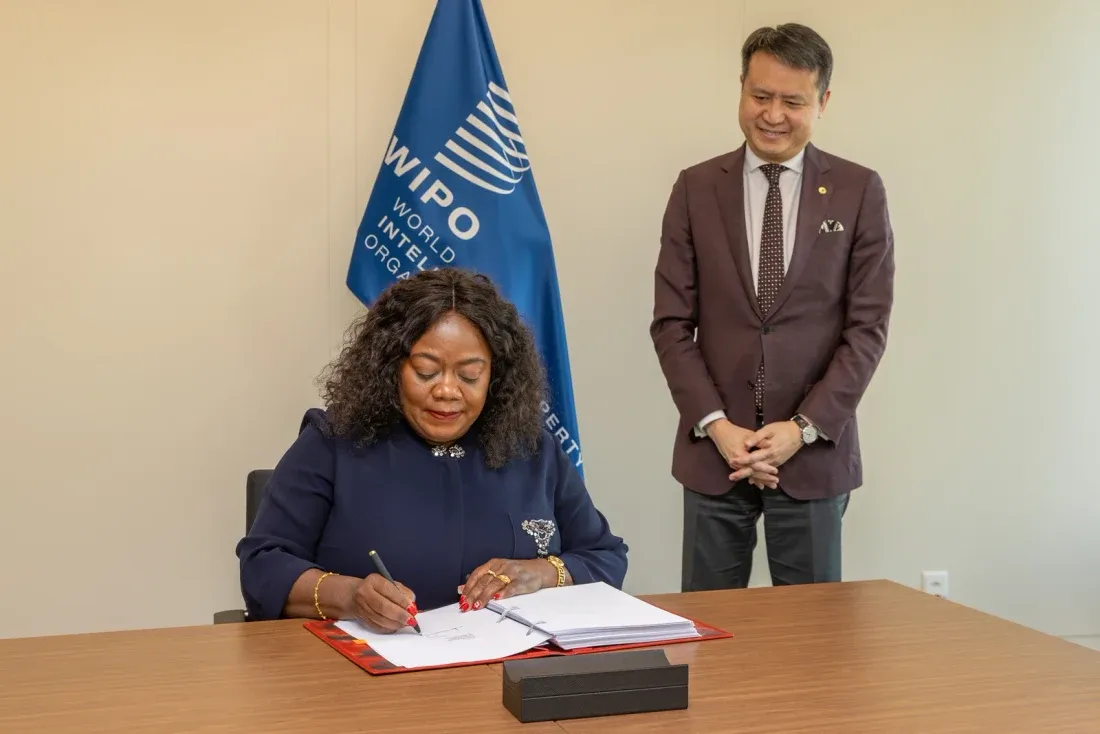
The WIPO Treaty on Intellectual Property, Genetic Resources and Associated Traditional Knowledge was adopted on 24 May 2024 in Geneva. It is the first WIPO treaty to address genetic resources and the traditional knowledge attached to them, and negotiations toward it ran for over two decades.
Its core is a mandatory patent disclosure requirement. Where a claimed invention is based on genetic resources, the applicant must disclose the country of origin. Where it is based on associated traditional knowledge, the applicant must disclose the Indigenous Peoples or local community that provided it. If that is unknown, the source must be given. If nothing is known, the applicant must declare that.
Set against a register in which that phrase does not occur once across 148 documents, this is not a small change in principle. The treaty’s effect is to move the missing term from something an applicant may decline to write into something a form requires.
Four things that limit it, all of them deliberate
The official summary sets out the constraints plainly, and they are not hidden or incidental. Each was the price of adoption.
It is not in force. The treaty enters into force three months after fifteen ratifications or accessions. Four instruments have been deposited, the most recent notified on 8 July 2026. WIPO’s own register titles the treaty “Not yet in force”.
It is not retroactive. The treaty imposes no obligations in relation to patent applications filed before it enters into force. Every document in our count was filed already. Whatever the treaty eventually does, it will never reach any of them.
Disclosure is not verified. Patent offices are to provide guidance, and are under no obligation to check whether what an applicant discloses is true.
Non-disclosure cannot kill a patent. Applicants get an opportunity to correct an omission unless there was fraudulent conduct or intent. Post-grant sanctions are available only where there was fraudulent intent. Fraud aside, no party should revoke, invalidate or render a patent unenforceable solely because the applicant failed to disclose.
It is tempting to read that list as a treaty gutted by the countries that had most to lose, and the reporting sometimes does read it that way. It is worth resisting.
A disclosure duty that could void patents years after grant would make every patent in a genetic-resources field permanently uncertain, and states that consider themselves providers of genetic resources have companies that hold patents too. The compromise bought near-universal adoption of a first disclosure obligation, having failed to reach one for twenty-plus years.
A weak instrument in force beats a strong one that never opens for signature. The criticism that holds is not that the limits exist. It is that the treaty is routinely described as if they did not.

The finding this site did not expect
The list of signatories and parties is public. It runs to over forty states and it is strikingly African: Algeria, Burkina Faso, Cabo Verde, the Central African Republic, Congo, Côte d’Ivoire, Eswatini, the Gambia, Ghana, Lesotho, Madagascar, Malawi, Morocco, Namibia, Niger, Nigeria, Sao Tome and Principe, Senegal, South Africa, Togo, Uganda, Tanzania, Zambia and Zimbabwe, most of them signing on the day of adoption. Malawi and Uganda have gone on to ratify.
Gabon is not on it. Not as a signatory, not as a ratifying party, not as an acceding state. Its immediate neighbours Congo and the Central African Republic are.
We state that as an absence from a public table on a stated date, which is what it is. A state may join at any time and the table is the kind of thing that changes. But as things stand, the country that has spent seven years asserting control over iboga at home has not joined the one international instrument that would carry that assertion into a foreign patent office.
Gabon’s domestic position is genuinely assertive. An arrêté has suspended iboga export since February 2019, and a decree of May 2026 subjects access, use, research, processing and sale to authorisation. What Gabonese law actually says sets both out.
None of that binds a patent examiner in Munich, Tokyo or Alexandria, Virginia. A national decree governs conduct on national territory. Only a treaty obligation reaches the office where the application is filed, and that is the instrument Gabon has not joined.
How this sits with Nagoya
The Nagoya Protocol, which Gabon is party to, already covers access to genetic resources and benefit sharing. So why does a second instrument matter?
Because they act at different points. Nagoya governs the taking: what must be agreed with a provider country before its resources or associated knowledge are used. GRATK governs the claiming: what must be said to a patent office afterwards. A researcher can comply with the first and disclose nothing at the second, and until 2024 there was no international obligation requiring otherwise.
Biopiracy and the Nagoya Protocol covers what that protocol requires, where Gabon stands under it, and the things it was never built to do.
The short version
The gap is real, it is measurable, and an instrument now exists that is aimed at it. That instrument is eleven ratifications short of force, will not apply backwards when it arrives, cannot cancel a patent for silence, and does not have the signature of the country whose plant this is.
Anyone telling you the iboga patent question has been dealt with by a 2024 treaty is describing something that has not happened yet, and that would not reach the existing record if it did.
Common questions
Sources
4 sources · How we source
- WIPO Treaty on Intellectual Property, Genetic Resources and Associated Traditional Knowledge
- Summary of the WIPO Treaty on Intellectual Property, Genetic Resources and Associated Traditional Knowledge (2024)
- Contracting Parties and Signatories, WIPO GRATK Treaty
- Nagoya Protocol on Access to Genetic Resources and the Fair and Equitable Sharing of Benefits Arising from their Utilization