How Ibogaine Works
The honest answer is that nobody knows. Here are the proposed mechanisms, what each rests on, and which ones a dosed human could plausibly reach.

Nobody knows. Ibogaine binds dozens of receptors and transporters, several mechanisms have been proposed, and not one has been confirmed in a human being. The best-supported candidate is blockade of a nicotinic receptor subtype. The only mechanism that is genuinely established explains the cardiac danger, not the benefit.
Most explanations of how ibogaine works are confident. That confidence is not coming from the literature, which after thirty years of investigation still describes proposals rather than an answer.
This page sets out what each proposal rests on, because knowing where a claim comes from is more useful than knowing what it asserts. Where the alkaloids act takes the same proposals region by region, and shows where the anatomy contradicts itself.
Why there is no single answer
Most drugs that reach a clinic are selective. They were designed to hit one thing and are described by that thing.
Ibogaine is the opposite. The screen that established its profile in 1995 tested more than fifty targets and found it interacting with a great many of them: opioid receptors, serotonin receptors and transporters, muscarinic receptors, dopamine uptake sites, sodium channels and the NMDA receptor complex.
A drug that touches everything is difficult to explain by any one thing, and that is the honest reason this question is still open.
That 1995 screen found its interactions across a range of one to a hundred micromolar. Human blood concentrations after treatment doses peak around five micromolar, reaching a little above six in the highest quarter of patients.
So a substantial part of that receptor profile describes chemistry that never happens in a person. Whenever you read that ibogaine “acts on” something, the question that settles it is: at what concentration, and does a human get there?
The candidates, ranked by how plausible they are in a person
Nicotinic α3β4 blockade
The strongest candidate, for a specific reason: it was measured on the human receptor, and at a concentration humans reach.
Ibogaine binds a single site inside the human α3β4 channel with a dissociation constant of about 0.46 micromolar, preferring the desensitised state and leaving it slowly. It is roughly nine times more potent than phencyclidine at inhibiting the associated calcium influx.
This receptor subtype sits in pathways relevant to drug reward, and a whole medicinal-chemistry programme has grown from the idea, with a 2023 review in a chemistry journal calling α3β4 inhibition a probable mechanism of action.
Probable is the correct word. No study has shown that blocking this receptor in a person produces any of the effects attributed to ibogaine.
Sigma-2 binding
Ibogaine’s highest measured affinity anywhere in the screened set is at the sigma-2 receptor, around 201 nanomolar, some forty-three times selective over sigma-1.
Two problems keep it from being the answer. What sigma-2 receptors do is not well settled. And the metabolite that persists for days binds the same site about twenty-six times more weakly, which sits awkwardly with any account in which the lasting effect belongs to noribogaine.
NMDA channel block
Ibogaine blocks the NMDA receptor channel in the same way ketamine does, and at concentrations of roughly 1.5 to 2.3 micromolar it is within human reach.
The complication is that the functional demonstrations, in tissue rather than binding assays, required 100 micromolar to 1 millimolar. That is twenty to two hundred times what a person attains. This mechanism is frequently cited using human postmortem tissue, which sounds more clinical than it is.
Growth factors
The most repeated claim, and the one furthest from human evidence. Ibogaine raises GDNF in rat midbrain, and a self-sustaining loop demonstrated in cell culture is what supposedly explains months of effect from a single dose.
No human has ever had a neurotrophin measured after ibogaine. Not GDNF, not BDNF, in blood, spinal fluid or brain. And in the most careful rat replication, BDNF rose as transcript while the paper states plainly that no significant increase in BDNF protein was found in any region studied. The science overview sets that out in full.
Serotonin
Ibogaine and noribogaine both raise extracellular serotonin in rats, the metabolite roughly ten times more potently, and both interact with the serotonin transporter. This is real and it is probably part of the subjective experience. It is not an account of an anti-addictive effect.
What ibogaine does not appear to do
One negative result deserves more attention than it gets, because it contradicts the most common one-line summary.
The idea that ibogaine “resets the reward system” implies something happening to dopamine. In rats given either compound intravenously, neither altered extracellular dopamine in the nucleus accumbens, which is the structure that phrase refers to.
Ibogaine did produce tremors in that study and noribogaine did not, and both raised corticosterone and prolactin. But the dopamine claim, in the place people mean it, has a null result behind it.
The test that has been run in humans, once
Fourteen patients in a Dutch hospital had their blood sampled through a treatment dose while their ECGs and symptoms were recorded. It is the only human study that relates drug concentration to what actually happened to people.
| Relationship tested | Result |
|---|---|
| Ibogaine concentration and QT prolongation | Significant |
| Ibogaine concentration and loss of coordination | Significant, rank correlation 0.67 |
| Noribogaine concentration and either | Not significant |
| Either compound and withdrawal severity | Not significant |
The concentrations that predicted the harms were measurable. Nothing predicted the thing people take the drug for.
That single table is the most honest summary of the mechanistic state of play that exists, and it is why this page will not give you a confident answer.
The mechanism that is settled
There is one, and it concerns the danger.
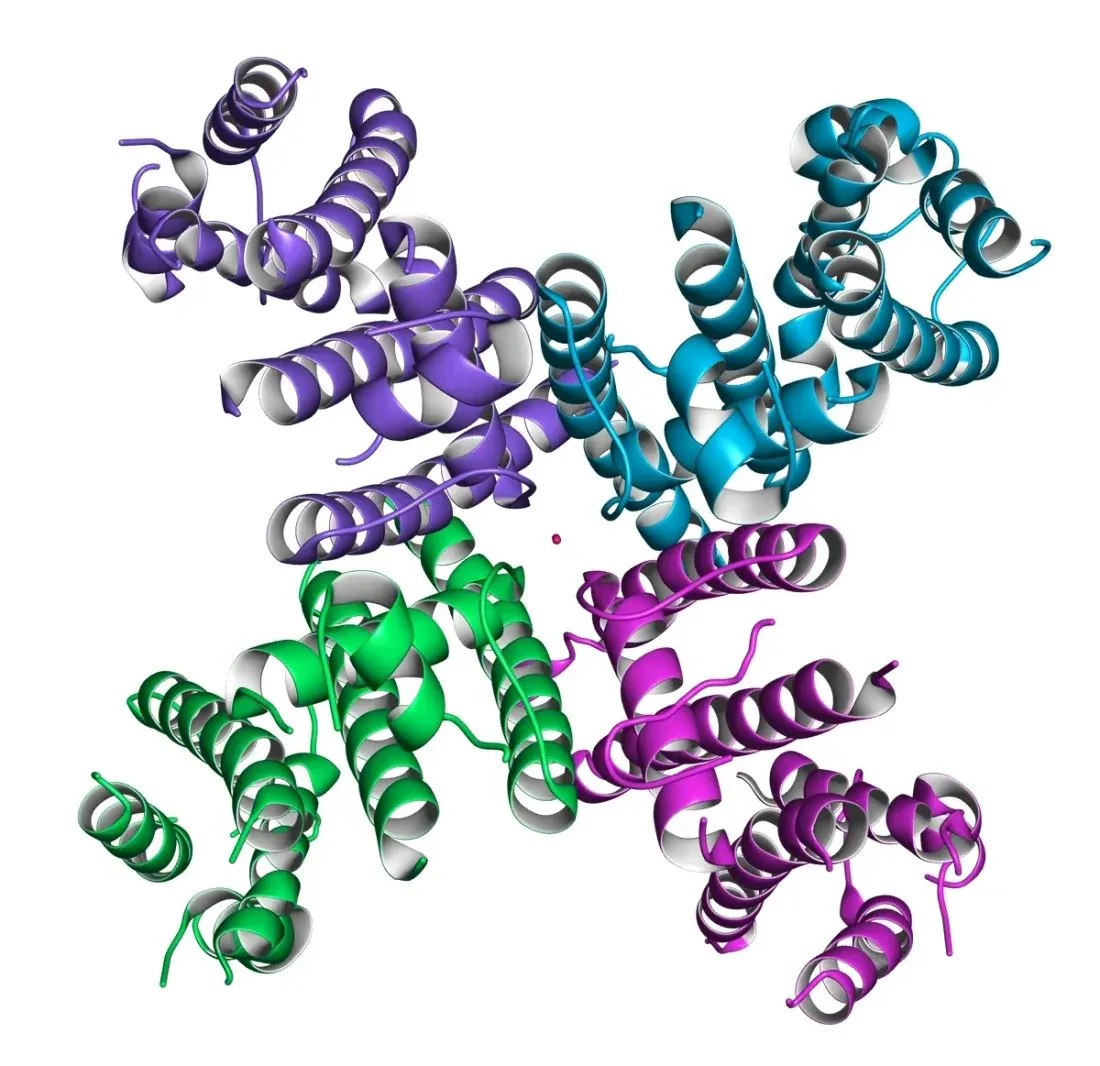
Ibogaine blocks the hERG potassium channel from inside the cell, only when the channel is open or inactivated, at low micromolar concentrations that humans reach. It has been replicated independently, the binding site has been mapped by mutating specific residues, and the metabolite blocks it slightly harder while lasting far longer.
That is what a worked-out mechanism looks like, and the contrast with everything above is the point. Ibogaine and the heart covers what follows from it.

Why the gap matters practically
An unknown mechanism is not merely an academic gap.
Dose is normally derived from a target and an exposure. Without a confirmed target, the 8 to 14 mg/kg range in clinical use comes from case series and inherited practice, not from dose finding.
Screening is normally directed by mechanism. What is screened for here is the cardiac risk, because that is the mechanism anyone can name.
And interactions are predicted from pathways. The one prediction that can be made with confidence concerns CYP2D6, which is metabolism rather than mechanism.
Anyone offering you a confident account of how this drug works is telling you something the literature does not contain.
Common questions
Sources
5 sources · How we source
- Receptor binding profile suggests multiple mechanisms of action are responsible for ibogaine's putative anti-addictive activity
- Interaction of ibogaine with human alpha3beta4-nicotinic acetylcholine receptors in different conformational states
- Ibogaine and its congeners are sigma 2 receptor-selective ligands with moderate affinity
- In vivo neurobiological effects of ibogaine and its O-desmethyl metabolite, 12-hydroxyibogamine (noribogaine), in rats
- The pharmacokinetics and pharmacodynamics of ibogaine in opioid use disorder patients